
Address:
Etesami St, Ziba Shahr, Bandar Abbas
Whatsapp:
Email:
info@tajerin.com
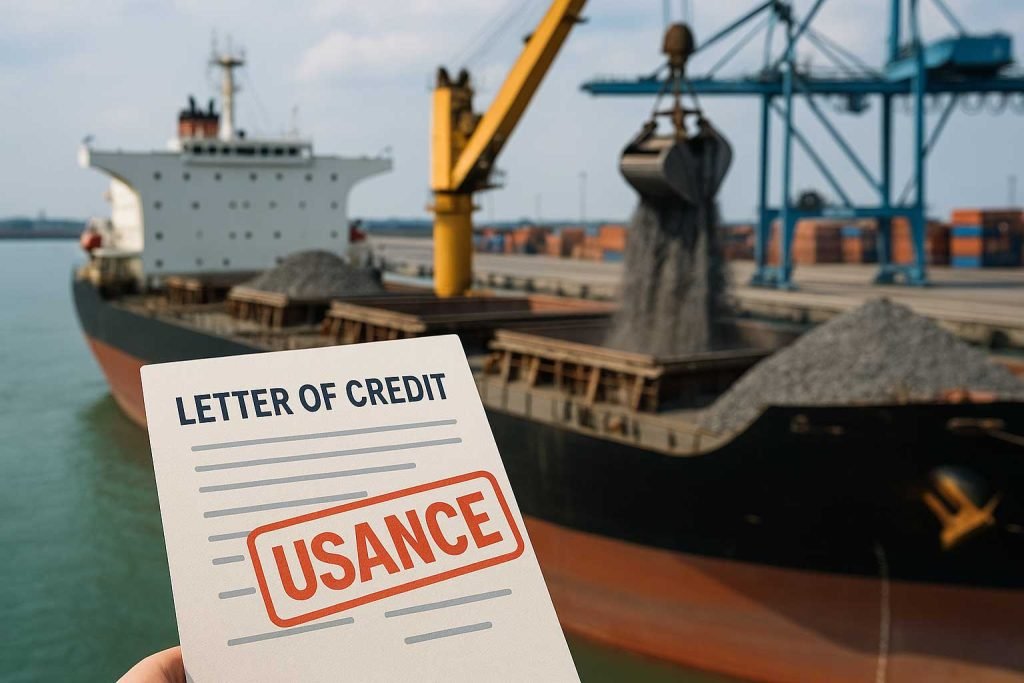
A Usance Letter of Credit allows payment to take place at a future maturity date rather than immediately at sight, provided the required conditions and documents are met.
In international trade, this structure can be useful when a buyer needs time to receive, sell, process, or use the goods before the payment becomes due. Therefore, a Usance LC can support commercial flexibility in transactions involving bulk commodities such as clinker and bitumen.
However, a Usance Letter of Credit is not simply a promise to “pay later.” The credit must clearly define the payment tenor, required documents, issuing bank, presentation terms, and other conditions. In addition, the beneficiary must make a complying presentation before the bank’s payment obligation at maturity applies under the relevant LC structure. Under UCP 600, a credit may be available by deferred payment, acceptance, sight payment, or negotiation. ICC Library
For clinker and bitumen buyers, the practical question is not only whether Usance LC is available. The more important question is whether the banking structure, shipment schedule, documentation, and commercial terms work together properly.
A Usance Letter of Credit is a documentary credit in which payment becomes due after an agreed period rather than immediately upon a complying presentation.
The payment period is commonly called the usance tenor.
For example, the LC may state that payment is due:
The exact starting point of the tenor matters.
For instance, “60 days after bill of lading date” is different from “60 days after sight” or “60 days after invoice date.”
Therefore, buyers and sellers should confirm the wording before the LC is issued.
HSBC describes a Usance LC as a structure where supplier credit is embedded in the LC and payment is made at the end of the agreed usance period after the relevant conditions are met. HSBC Business

A typical Usance LC transaction may follow these steps:
Therefore, the physical shipment and the payment date do not necessarily occur at the same time.
For a bulk cargo transaction, this difference can be commercially significant.
The main difference is payment timing.
Under a sight LC, payment is due after a complying presentation according to the applicable banking process.
Under a Usance LC, payment becomes due at a future maturity date according to the agreed tenor.
In simple terms:
Sight LC → payment after compliant document examination
Usance LC → payment at an agreed future maturity date after the required conditions are satisfied
This distinction can affect:
Therefore, buyers should not compare Sight and Usance LC only by looking at the payment date.
The terms Usance LC and Deferred Payment LC are often discussed together.
Under UCP 600, a credit can be available by deferred payment, meaning the bank incurs a deferred payment undertaking and pays at maturity when the presentation complies with the credit. ICC Library
In practice, a usance structure may also involve acceptance of a draft, depending on the credit.
However, ICC guidance recommends that banks use deferred payment rather than acceptance of a draft for usance documentary credits unless there is a specific commercial, legal, or regulatory reason to require a banker’s acceptance. ICC – International Chamber of Commerce
For buyers and sellers, the important point is to understand exactly how the LC is made available and when payment becomes due.

There is no single standard tenor for all transactions.
Common structures may include:
However, a longer tenor does not automatically mean a better deal for the buyer.
A longer payment period may also affect:
Therefore, the buyer should compare the full commercial cost rather than only asking for the longest possible tenor.
A Usance Letter of Credit can be relevant in a bulk clinker transaction when the buyer needs additional time between shipment and final payment.
For example, a grinding plant may import clinker, receive the cargo, process it into cement, and generate sales before the LC maturity date.
However, the payment structure should still match the operational realities of the transaction.
A buyer working with a clinker supplier should confirm:
A longer payment term cannot compensate for weak shipment planning.
Therefore, commercial terms and clinker logistics should be reviewed together.
Usance LC can also be used in bitumen transactions, including bitumen 60/70, depending on the seller, buyer, bank, and commercial structure.
The buyer should define:
For example, bitumen may move in:
Therefore, the documentation required under the LC may differ from a bulk clinker shipment.
The LC should reflect the actual transaction rather than using generic wording copied from another commodity deal.
A Usance Letter of Credit may provide several commercial advantages.
The buyer may receive goods before the payment maturity date.
As a result, the buyer gains additional time to manage working capital.
For an industrial buyer, the payment tenor may better match production and sales cycles.
For example, a cement grinding plant may prefer a structure that gives it time to receive and process clinker before payment falls due.
In some cases, deferred payment terms can make larger purchases easier to manage.
However, this depends on the buyer’s credit facility and the issuing bank.
A buyer may negotiate product price, shipment timing, and payment tenor together.
Nevertheless, longer credit normally has a cost somewhere in the transaction.

Usance LC can be useful, but it also introduces additional considerations.
The seller may have to wait until maturity.
Therefore, the issuing bank’s creditworthiness becomes important.
If the seller is not comfortable with the issuing bank or country risk, confirmation may be requested.
The bank examines documents, not the physical cargo.
Therefore, discrepancies can create delays, waivers, additional fees, or disputes.
A supplier may price the cost of deferred payment into the transaction.
Alternatively, the beneficiary may seek early financing or discounting, subject to bank availability and terms.
Cross-border payments may be affected by regulatory restrictions, sanctions, foreign exchange controls, or banking limitations.
Therefore, the banking route should be checked before shipment.
The exact document list depends on the contract.
However, a clinker or bitumen transaction may require documents such as:
The buyer should avoid unnecessary documents.
Each additional requirement creates another opportunity for discrepancy.
Therefore, LC wording should remain as clear and practical as possible.
A discrepancy occurs when presented documents do not comply with the LC terms.
Examples may include:
In a Usance Letter of Credit, discrepancies can affect the establishment or timing of the bank’s payment obligation.
Therefore, buyers and sellers should review documentary requirements before shipment begins.
Several banks may participate in the transaction.
The issuing bank opens the LC at the buyer’s request.
Under UCP 600, the issuing bank is irrevocably bound to honour according to the credit terms when there is a complying presentation.
The advising bank authenticates and advises the LC to the beneficiary.
However, advising the LC does not automatically mean that the advising bank adds its own payment undertaking.
A confirming bank adds its own undertaking in addition to the issuing bank when confirmation is added under the credit structure.
This can reduce certain issuing-bank or country risks for the beneficiary.
However, confirmation normally involves additional cost and depends on bank approval.
There is no universal answer.
The cost may be reflected in:
Therefore, buyers should ask a very practical question:
What is the total cost of obtaining the additional payment period?
For example, a 90-day Usance LC may appear attractive, but the supplier may increase the commodity price to cover financing cost.
As a result, the buyer should compare the full transaction rather than looking only at payment days.
Sometimes, yes.
Depending on the LC structure, bank, credit quality, and applicable financing arrangement, the beneficiary may be able to obtain financing or discount the deferred receivable before maturity.
However, this should never be assumed.
The seller should confirm:
Therefore, “Usance LC” does not automatically mean that the seller receives immediate cash.
Consider a simplified example.
A buyer purchases 30,000 MT of clinker under CFR terms.
The commercial agreement states:
Payment: Irrevocable Usance LC, 60 days from bill of lading date.
The seller ships the clinker and presents the required documents.
If the presentation complies with the LC terms, the relevant bank undertaking follows the structure stated in the credit, and payment becomes due at the agreed maturity date.
The buyer therefore receives a 60-day payment period based on the agreed tenor.
However, the exact banking obligation depends on the LC wording and availability structure.
Consider another example.
A buyer purchases bitumen 60/70 under an agreed international delivery term.
Payment is:
90-day Usance LC from bill of lading date.
The seller ships the goods and presents the specified documents.
If the presentation complies, payment becomes due according to the maturity stated in the credit.
Meanwhile, the buyer gains additional working-capital time.
However, the supplier may include the financing cost in the price.
Therefore, the buyer should compare both the commodity price and payment terms.
Several mistakes can create unnecessary problems.
Avoid wording that leaves uncertainty about when the maturity period starts.
Every additional document creates another potential discrepancy.
The seller may reject the issuing bank after the commercial deal has already been negotiated.
Therefore, bank acceptability should be discussed early.
The latest shipment date, expiry date, presentation period, and maturity calculation should work together.
A clinker shipment and a bitumen shipment may require different documents.
Therefore, the LC should match the actual commodity and shipping structure.
Before opening the LC, the buyer should confirm:
This review is especially important for large bulk commodity transactions.
A clinker supplier evaluating Usance LC terms must consider more than the headline payment period.
The supplier may need to assess:
Therefore, a 90-day payment term may be commercially acceptable in one transaction but unsuitable in another.
Each deal should be assessed individually.
Tajerin works with buyers seeking clinker, bitumen, and other traded materials under different commercial structures.
When a buyer proposes a Usance Letter of Credit, the first step is to review whether the proposed payment terms match the supply and shipment requirements.
Relevant information includes:
Where necessary, the transaction can then be coordinated with the relevant supply and logistics parties.
Tajerin does not need to present every LC structure as automatically acceptable.
Instead, the objective is to determine whether the complete commercial terms are workable for the specific transaction.
Many international documentary credits are issued subject to UCP 600, the rules published by the International Chamber of Commerce.
UCP 600 defines important concepts such as:
For a Usance LC, the availability and maturity wording should be particularly clear.
ICC guidance also recommends deferred payment as an alternative to acceptance of drafts for usance documentary credits unless there is a specific reason to use a banker’s acceptance. ICC – International Chamber of Commerce
Therefore, buyers should work with their bank when preparing the final LC wording.
Payment terms and physical logistics should not be treated separately.
For example, a clinker shipment may involve:
If the shipment schedule changes, the LC may also require amendment.
Therefore, buyers should coordinate clinker logistics and banking timelines before the vessel reaches the loading port.
Before asking a clinker supplier to accept deferred payment terms, the buyer should ask:
These questions should be discussed before final contract confirmation.
A Usance Letter of Credit is a documentary credit where payment becomes due at an agreed future maturity date rather than immediately at sight, subject to the credit terms and a complying presentation.
Sight LC provides for payment after a complying presentation according to the credit structure, while Usance LC provides for payment at a future maturity date.
It means payment becomes due 60 days from the reference date stated in the LC, such as bill of lading date, sight, or another specified date.
Yes, if the buyer, seller, and relevant banks accept the structure and the commercial terms are workable.
Yes. However, the LC terms and required documents should match the actual bitumen shipment and delivery structure.
No. The bank’s obligation depends on the LC terms and the applicable rules, including the requirement for a complying presentation.
Potentially, through financing or discounting arrangements, but this depends on the bank, LC structure, credit risk, and financing terms.
Yes, when the documentary credit states that it is subject to UCP 600.
A Usance Letter of Credit can be a useful payment structure for clinker and bitumen transactions when the buyer needs additional time before payment maturity.
However, the benefit of deferred payment depends on the complete transaction.
Buyers should evaluate:
Likewise, sellers should evaluate bank risk, country risk, working-capital impact, and documentary requirements.
For clinker transactions in particular, the payment structure should support—not conflict with—the shipment plan.
If you are sourcing from a clinker supplier, send Tajerin your specification, quantity, destination, preferred delivery term, and proposed payment structure.
Get a quotation from Tajerin, compare it with your other options, and choose the commercial terms that work best for your transaction.