
Address:
Etesami St, Ziba Shahr, Bandar Abbas
Whatsapp:
Email:
info@tajerin.com
Tajerin is a gypsum board supplier serving contractors, distributors, interior-fit-out companies, building-material traders, developers, and bulk buyers.
However, buying gypsum board is not only about comparing the price per sheet. Buyers should first confirm the required board type, thickness, dimensions, edge profile, quantity, destination, and delivery term.
Therefore, a clear technical inquiry helps suppliers prepare quotations that can be compared properly.
Tajerin works with established production sources and can review each inquiry according to product specification, order quantity, packaging, destination, shipment schedule, and commercial terms.
Send us your gypsum board type, thickness, dimensions, quantity and destination. Get a quotation from Tajerin, compare it with your other options, and choose the commercial terms that work best for your project.
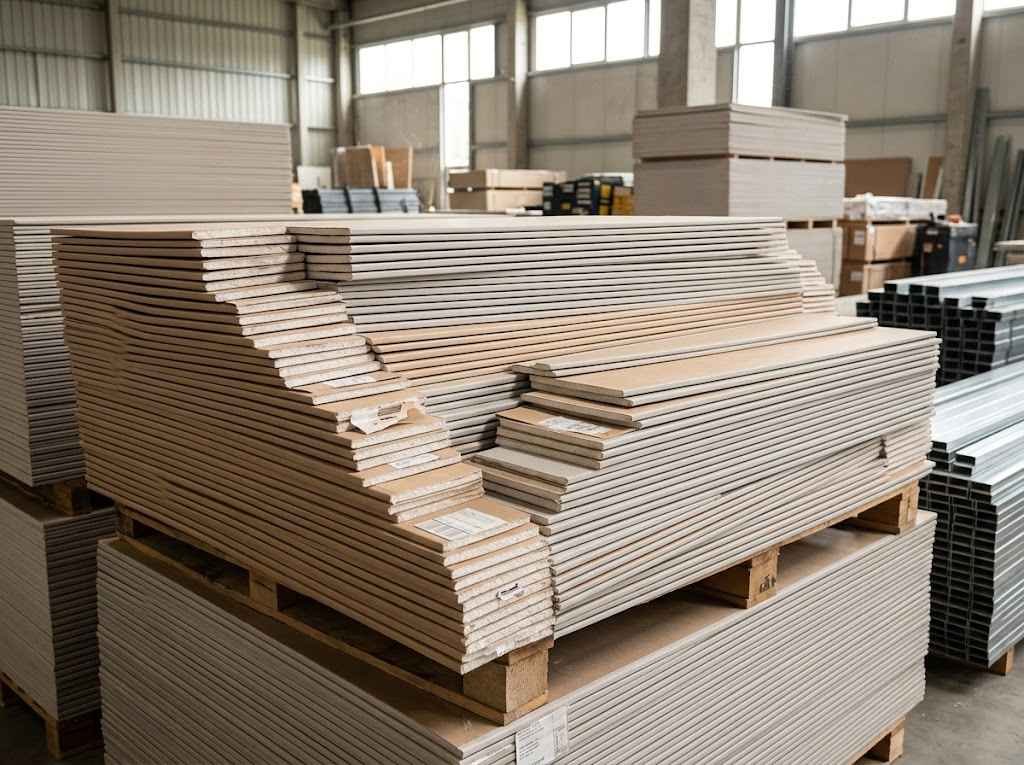
In simple terms, gypsum board is a panel product made with a gypsum core and facing layers designed for interior construction.
In practice, it is widely used in modern building projects because installation can be faster and lighter than many traditional wall systems. Gypsum board is produced from processed gypsum materials, while buyers looking for raw or processed gypsum can also review our gypsum powder supply page.
For example, typical applications include:
However, different projects require different board types.
Therefore, buyers should identify the actual application before requesting a quotation.
In addition, a professional gypsum board supplier should provide clear information about the offered product.
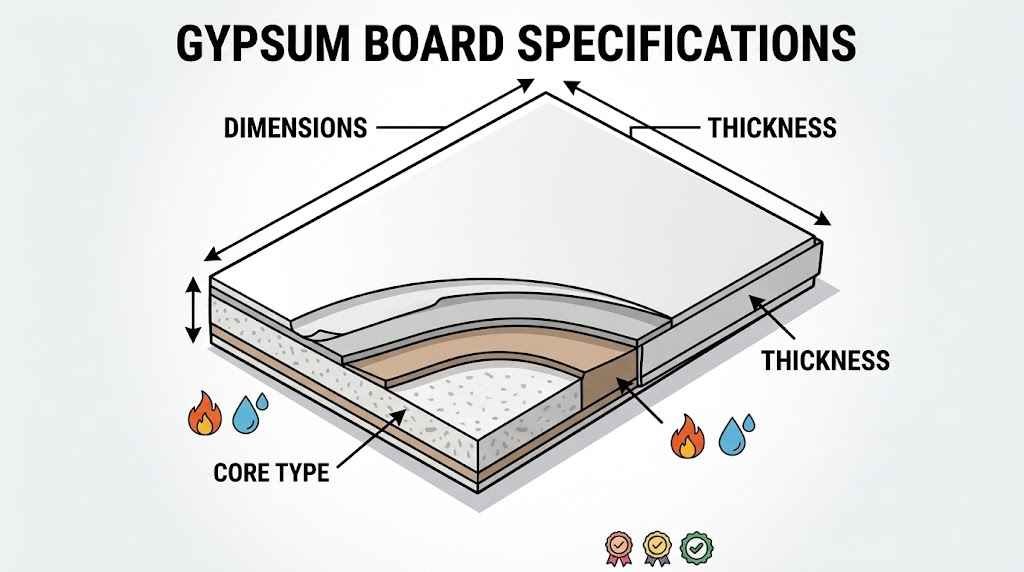
Depending on the project, buyers may need to check:
However, not every parameter is equally important for every application.
For this reason, buyers should provide the project or tender specification whenever it is available.
For this reason, gypsum boards are available in different thicknesses according to the intended application.
For instance, common commercial requirements may include:
However, actual availability depends on the manufacturer and destination market.
Therefore, buyers should state the exact thickness required for each part of the project.
In addition, board dimensions affect installation, handling, freight, and material consumption.
Likewise, available dimensions can vary according to the manufacturer and market.
Therefore, buyers should clearly specify:
For example:
1200 × 2400 × 12.5 mm
is much more useful than a general request such as:
“Need regular gypsum boards.”
In general, standard gypsum board is commonly used in dry interior areas where special fire or moisture resistance is not required.
Typical applications may include:
However, standard board should not automatically be used in wet or high-humidity areas.
Therefore, project conditions should be reviewed before selecting the board type.
By comparison, moisture-resistant gypsum board is designed for interior areas exposed to higher humidity than normal dry spaces.
For example, it may be considered for certain:
However, moisture-resistant board is not the same as a completely waterproof panel.
Therefore, buyers should confirm whether the project requires moisture resistance or a different board system entirely.
Similarly, fire-resistant gypsum board is manufactured for applications where enhanced fire performance is required.
Depending on the approved board system, it may be used in:
However, fire resistance depends on the complete wall or ceiling assembly, not only on the board itself.
Therefore, buyers should follow the approved system specification.
For example, a common purchasing mistake is to assume that buying a fire-resistant board automatically creates a specific fire-rated wall.
That is not always correct.
For example, fire performance may depend on:
Therefore, contractors should purchase boards according to the complete approved assembly.
In practice, drywall construction commonly uses gypsum boards fixed to metal or timber framing.
As a result, these systems can provide several advantages, including:
However, the correct board type and framing system depend on the project.
Therefore, buyers should consider the complete drywall specification rather than purchasing boards separately from the rest of the system.
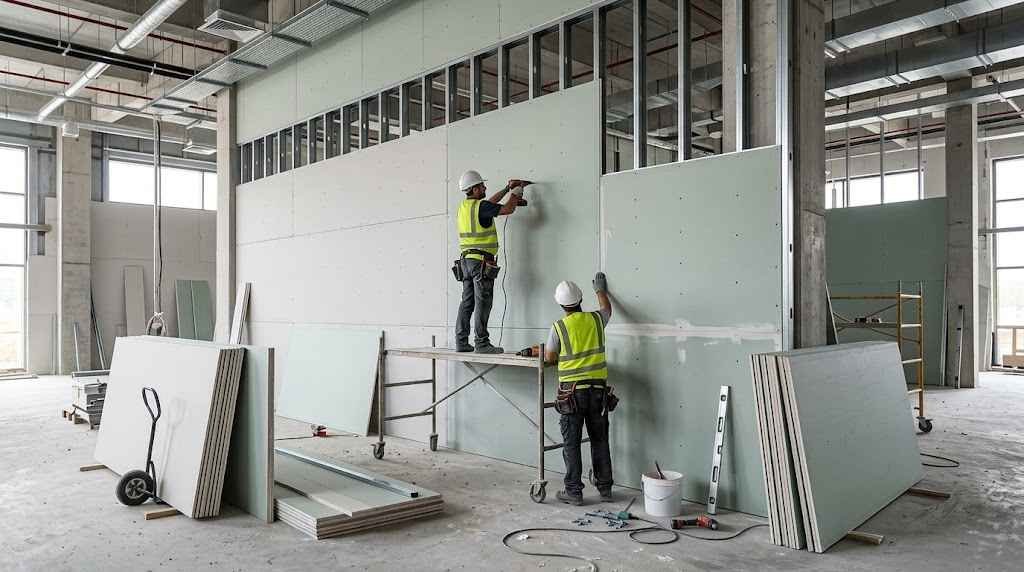
For example, partition walls are one of the most common applications for gypsum board.
Depending on the design, a partition system may include:
Therefore, board quantity should be calculated together with the complete partition system.
Interior fit-out companies often require several board types within the same project.
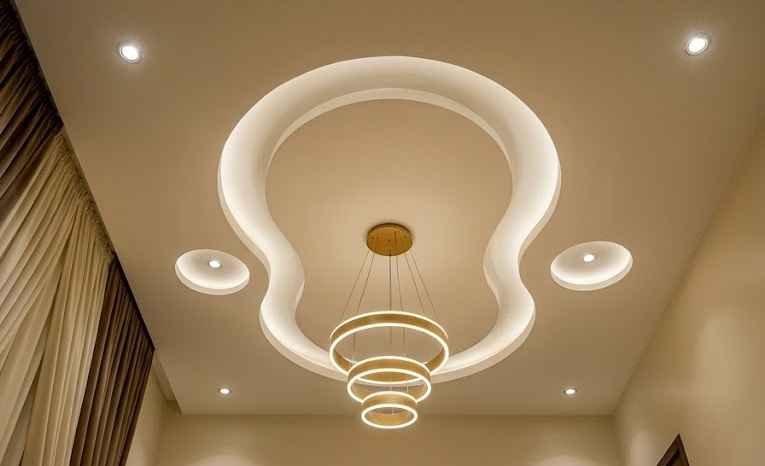
Moreover, gypsum board is widely used in ceiling systems.
Applications may include:
However, ceiling installations may require different board thicknesses, framing spacing, and fixing methods.
Therefore, buyers should follow the approved ceiling-system specification.
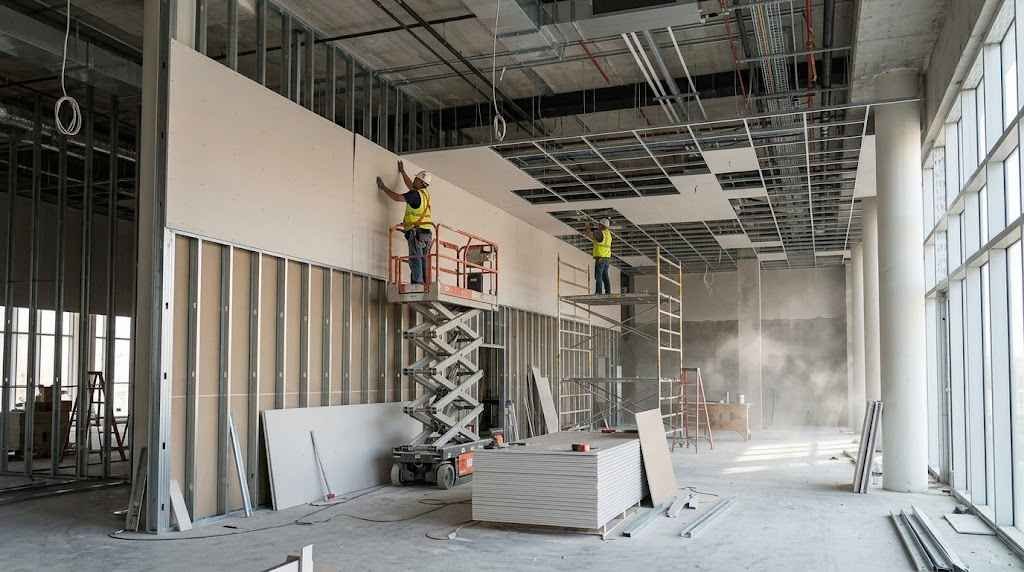
Interior fit-out companies often require several board types within the same project.
For instance, one project may need:
Therefore, the RFQ should provide a clear quantity breakdown by board type.
As a result, the supplier can prepare a more accurate product and price combination.
Depending on the application, gypsum board may be supplied with different edge profiles.
Depending on the manufacturer, buyers may encounter:
As a result, edge type can influence joint treatment and finishing.
Therefore, the required edge profile should be confirmed when it matters to the installation system.
In addition, the board surface should be suitable for the intended finishing process.
For example, buyers may check:
However, not every defect originates at the factory.
Damage can also occur during loading, transport, unloading, or storage.
Therefore, quality control should include both the product itself and the way it is handled.
Meanwhile, board weight can affect:
However, lower weight is not automatically better.
The board should still comply with the required standard and performance criteria.
Therefore, buyers should compare the complete specification rather than choosing a product based only on weight.
A gypsum board supplier may offer boards produced according to different standards depending on the manufacturer and destination market.
Buyers may encounter:
Therefore, the applicable standard should be included in the purchase inquiry.
In particular, this becomes important for consultant-approved, commercial, or government projects.
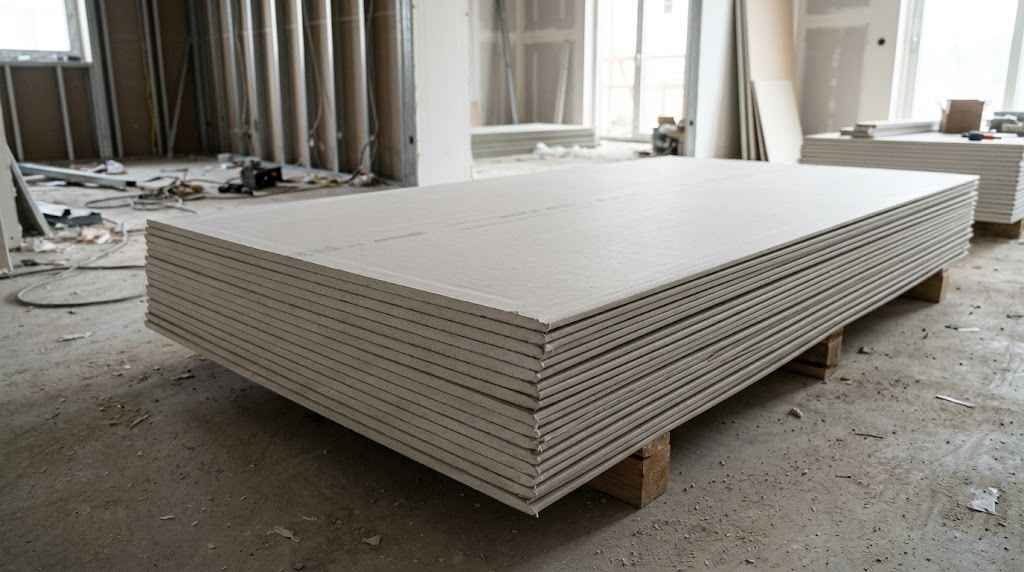
Buyers requiring ASTM-based specifications can also review the ASTM C1396/C1396M Standard Specification for Gypsum Board for additional technical reference.
For project purchases, buyers may require supporting technical documents.
For instance, these can include:
However, the required documentation depends on the board type and application.
Therefore, buyers should clarify document requirements before placing the order.
For larger orders, shipments may be inspected before loading or at the destination.
Depending on the purchase agreement, inspection may include:
Moreover, inspection procedures should be agreed in advance when they form part of the commercial contract.
Problems may occur during:
For this reason, gypsum boards require careful packaging and handling because their edges and surfaces can be damaged relatively easily.
Depending on the manufacturer, boards may be:
However, packaging should also match the planned shipment method.
Therefore, export buyers should confirm how the boards will be protected during transportation.
However, a low product price can lose its advantage if boards arrive with broken corners, damaged surfaces, or other handling damage.
Problems may occur during:
Therefore, packaging quality and handling procedures should be considered when comparing suppliers.
In many cases, reducing damage is worth more than a small saving in the initial board price.
Gypsum boards are commonly shipped in containers for many export markets.
However, the number of boards or square meters per container depends on:
Therefore, buyers should ask for both:
Boards per container
and
Total square meters per container
As a result, this makes freight comparison much easier.
In commercial terms, gypsum board can be discussed using several quantity units.
Buyers may request:
However, quotations become easier to compare when units are clearly defined.
Therefore, Tajerin recommends including both the board dimensions and total required quantity.
There is no single global gypsum board price.
In particular, commercial pricing may depend on:
Therefore, buyers should compare quotations based on the same specification.
For example, a 12.5 mm standard board should not be directly compared with a fire-resistant or moisture-resistant board.
For example, some quotations may be presented per sheet, while others may be easier to compare on a square-meter basis.
Therefore, when board dimensions differ, buyers can calculate:
Board Price ÷ Board Area
As a result, this provides a clearer product-price comparison.
However, freight, packaging, loading efficiency, and damage risk should still be included in the final landed-cost calculation.
A cheaper board may initially look attractive.
However, buyers should also consider:
For example, damaged boards can increase waste, labor, and installation cost.
Therefore, the lowest unit price does not always create the lowest project cost.
Under an FOB structure, the buyer normally arranges the main ocean freight from the agreed loading port according to the applicable Incoterm.
Therefore, an FOB quotation should clearly state:
Moreover, the buyer should confirm container-loading details before comparing freight.
Under CFR terms, the seller arranges the main ocean freight to the named destination port according to the applicable Incoterm.
Therefore, the exact destination port should be provided.
For example:
CFR Mombasa
is much more useful than:
CFR Africa
because freight depends on the actual route and destination port.
Under CIF terms, insurance is also arranged according to the applicable Incoterm requirements.
However, buyers should still review:
Therefore, CIF does not automatically mean delivery to the final construction site or warehouse.
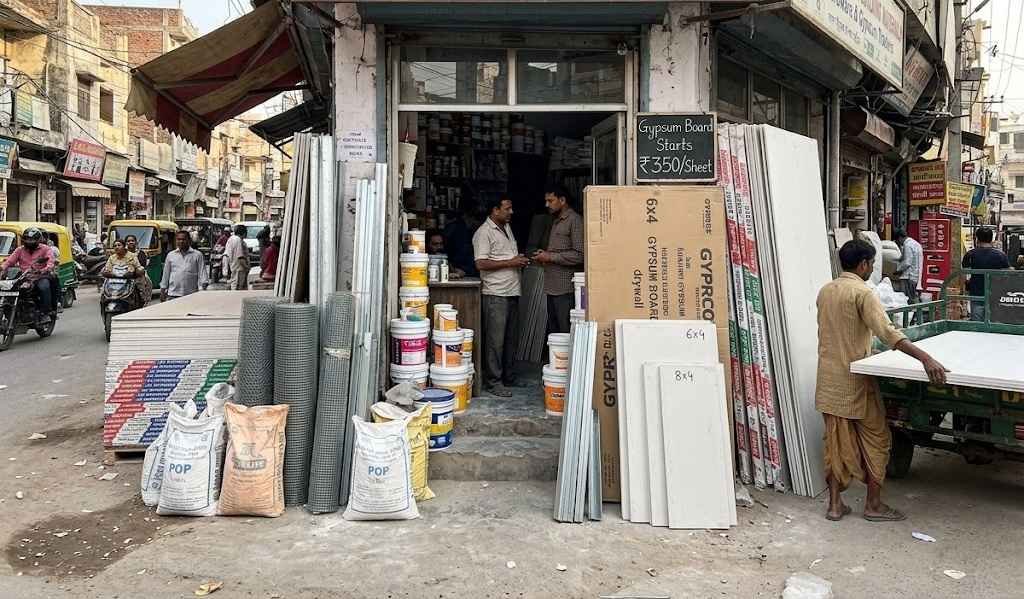
Gypsum board is relatively large and can be vulnerable to handling damage.
Therefore, logistics planning should consider both cargo protection and container efficiency.
For example, important factors may include:
In addition, Tajerin can coordinate transportation requirements with logistics partners where needed.
Gypsum boards should be protected from water and excessive moisture.
As a result, exposure may affect:
Therefore, containers should be dry and suitable for the cargo.
In addition, boards should remain protected during unloading and temporary storage.
Boards should normally be stored:
Moreover, improper stacking can deform or damage the boards.
Therefore, the receiving warehouse should be prepared before the shipment arrives.
Contractors should purchase boards according to approved architectural and technical specifications.
Before ordering, they should confirm:
Therefore, ordering directly from the approved BOQ or material schedule can reduce mistakes.
Distributors often have different priorities from contractors.
For example, they may focus on:
Therefore, distributors should provide expected monthly volume and preferred product mix where possible.
This helps suppliers evaluate commercially suitable options.
Large developments may require substantial quantities over several construction phases.
In this case, buyers should consider:
Therefore, procurement planning can be just as important as the initial unit price.
Before choosing a gypsum board supplier, buyers should compare several factors.
Is the product standard, moisture-resistant, fire-resistant, or another required type?
Does the board match the specified thickness?
Are the width and length correct?
Does the product comply with project or destination requirements?
Are fire, moisture, or other performance requirements satisfied?
Can the boards withstand export handling and transportation?
How many sheets or square meters are supplied per container?
Can the required technical certificates and test reports be provided?
Is the shipment arrangement practical for the destination?
Are the price, payment conditions, and delivery terms workable?
Ultimately, the best offer combines product compliance, low damage risk, efficient container loading, dependable supply, and competitive commercial terms.
Depending on the project and destination, buyers may require:
However, buyers should confirm the required document list before shipment.
This is particularly important when consultant approval or a Letter of Credit is involved.
Payment terms depend on the transaction, quantity, production source, destination, and buyer profile.
Possible structures may include:
Nevertheless, payment requirements should be clear before production and shipment planning begin.
Moreover, document requirements should be reviewed carefully in LC transactions.
To receive a useful quotation, buyers should provide:
For example:
Product: Gypsum Board
Type: Standard Board
Size: 1200 × 2400 mm
Thickness: 12.5 mm
Quantity: 10,000 Sheets
Destination: Jebel Ali, UAE
Delivery: CFR
Shipment: December
Documentation: Product Data + Standard Export Documents
Payment: LC
With this information, a gypsum board supplier can prepare a much more accurate quotation.
Before asking for a quotation, make sure you can answer these questions:
If these points are clear, supplier quotations become much easier to compare.
However, for project purchases, the approved material specification should always take priority over general product descriptions.
Tajerin operates as a trading and supply company with access to established production sources.
For each inquiry, we review:
In addition, Tajerin can coordinate transportation with logistics partners where required.
Our objective is not simply to provide a price per board.
Instead, we aim to prepare a commercially workable quotation that buyers can compare with other available options.
Send the board type, thickness, dimensions, quantity, required standard, destination, and preferred delivery term.
In general, standard gypsum board is used for interior walls, partitions, ceilings, and other dry-area applications.
It is designed for interior environments with higher humidity than areas where standard boards are normally used. However, it should not automatically be treated as a waterproof product.
It is designed for systems requiring enhanced fire performance. Nevertheless, the final fire rating depends on the complete tested wall or ceiling assembly.
The correct thickness depends on the wall or ceiling system and the approved project specification.
Yes. In fact, container shipment is common for many export orders.
Not always. For example, price per square meter may provide a better comparison when board dimensions differ.
Depending on source, destination, quantity, and shipment conditions, Tajerin can review different delivery structures.
Depending on the production source and product type, relevant technical documentation can be reviewed as part of the inquiry.
If you are looking for a gypsum board supplier, send Tajerin your complete technical and commercial requirement. For buyers sourcing natural gypsum as a raw material, Tajerin also supplies gypsum stone for industrial applications.
At minimum, provide:
Board Type + Thickness + Dimensions + Quantity + Destination + Delivery Term