Address:
Etesami St, Ziba Shahr, Bandar Abbas
Whatsapp:
Email:
info@tajerin.com
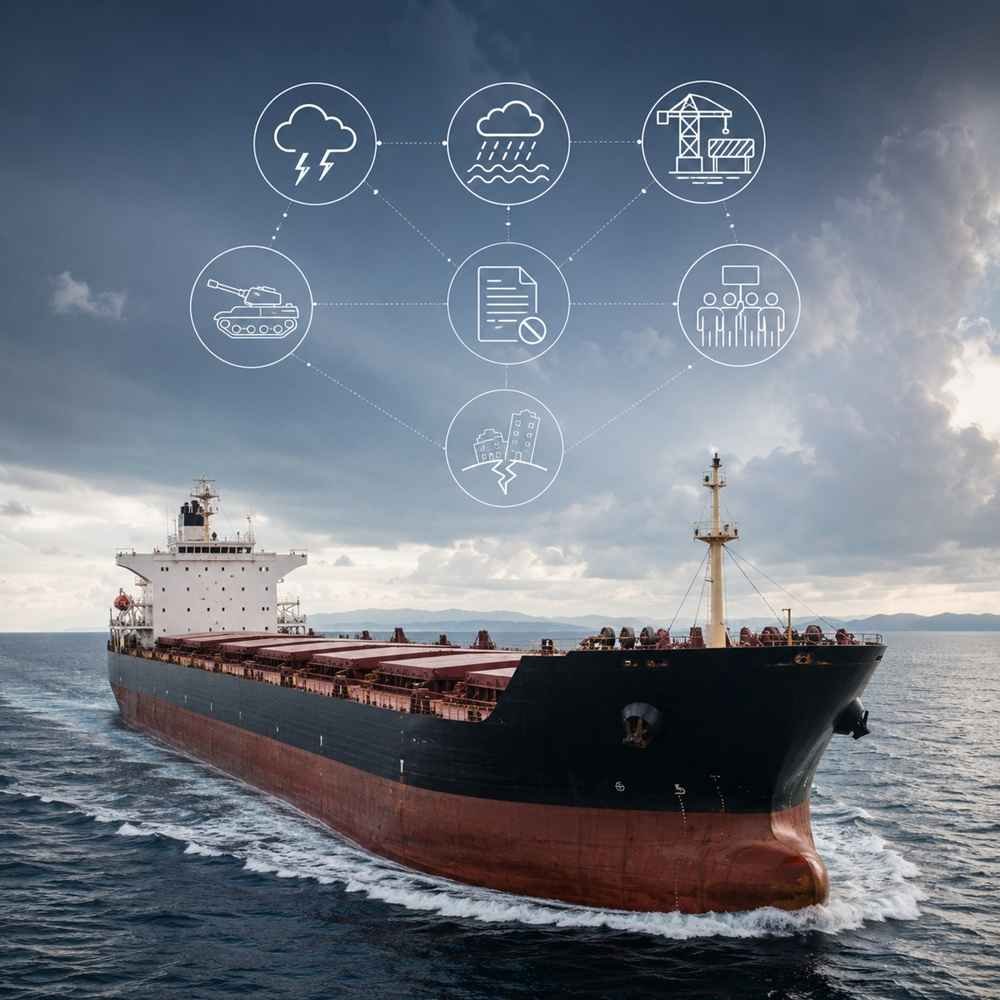
A well-drafted clinker contract should define what happens when events outside the control of the buyer or seller prevent shipment, loading, delivery, payment, or performance. The International Chamber of Commerce provides model Force Majeure and Hardship Clauses that parties can use as a reference when drafting international commercial contracts.
In international clinker trade, a transaction may involve factories, ports, vessels, banks, inspection companies, customs authorities, and logistics providers in several countries. A disruption at only one stage can affect the entire shipment. Therefore, the contract should explain how each major disruption affects the parties’ obligations.
This is why the Force Majeure clause should not be treated as a standard paragraph that buyers and sellers sign without reviewing.
The clause should clearly explain:
For bulk clinker buyers, these details can make a major difference when a shipment does not proceed as planned.
Force Majeure generally refers to extraordinary events outside the reasonable control of the parties that prevent or seriously disrupt contractual performance.
Depending on the contract and applicable law, examples may include:
However, the existence of a difficult situation does not automatically mean that Force Majeure applies. In other words, the event must meet the conditions defined in the contract.
A good clinker contract should define the qualifying events rather than relying on broad wording.
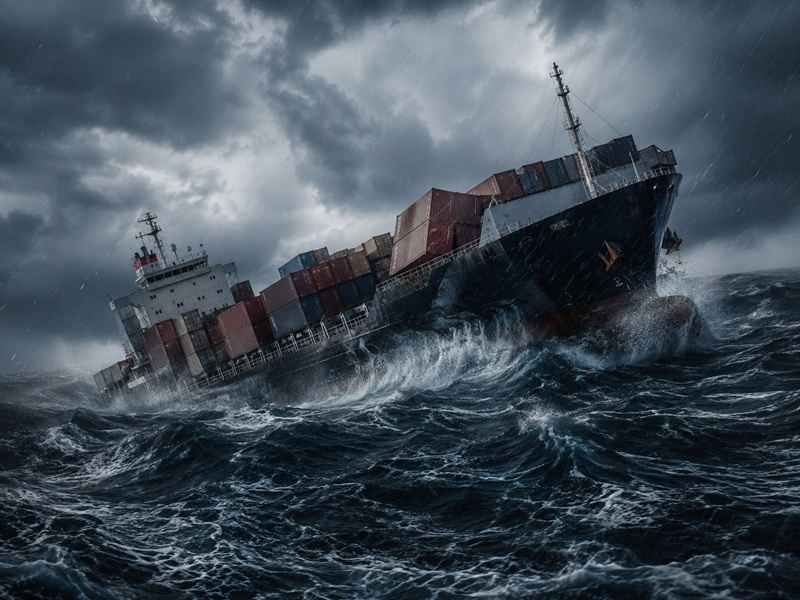
Clinker is commonly traded in large quantities, and bulk shipments require careful coordination between production, inland transport, port operations, vessel nomination, loading and documentation.
For example, imagine a buyer signs a contract for 50,000 MT of clinker.
The seller prepares the cargo and the buyer arranges a vessel. Shortly before loading, a government authority closes the loading port because of an emergency.
Without a clear Force Majeure clause, several questions immediately arise:
The contract should answer these questions before a problem occurs. Therefore, both parties should review these terms before signing
One common mistake is to assume that any unexpected cost or difficulty qualifies as Force Majeure.
Usually, normal commercial risks should be treated separately. For example, a higher freight rate does not necessarily qualify as Force Majeure.
For example, the following situations may not automatically qualify:
The exact result depends on the wording of the contract and the applicable law. For this reason, broad wording can create unnecessary uncertainty.
Therefore, buyers and sellers should avoid vague clauses such as:
“Any event beyond the control of the seller shall be considered Force Majeure.”
That wording may create uncertainty instead of solving it.
The exact list depends on the origin, destination and shipment structure.
However, parties in clinker transactions commonly need to consider risks such as the following.
If the nominated loading port becomes unavailable, the contract should explain whether:
Export restrictions, import restrictions, licensing changes or emergency regulations may directly affect the shipment.
A clinker contract should clarify how such events affect performance.
Military conflict may affect:
The contract should not simply mention “war.” Instead, it should explain how the event must affect performance. It should also define what consequence must occur before the clause applies.
Severe storms, earthquakes, floods or other major events may interrupt production, inland transport or port operations.
The parties should define whether the event must actually prevent performance or merely make performance more difficult.
A strike at a loading terminal can delay shipment significantly.
The contract should clarify whether all strikes qualify or only large-scale events outside the affected party’s control.
Force Majeure should be coordinated with the logistics terms of the transaction.
For example, suppose a vessel arrives at the port but loading cannot begin because of a qualifying Force Majeure event.
The contract should make clear how this affects:
This is particularly important because Force Majeure under the sale contract does not automatically resolve every obligation under a separate charter party.
Buyers arranging vessels should therefore review both the clinker purchase agreement and the shipping arrangements.
Demurrage can become one of the most expensive consequences of a delayed bulk shipment.
If a vessel is waiting while a Force Majeure event affects the loading port, the parties need to know whether laytime continues to count.
This should not be left to assumptions. Instead, the parties should define the effect on laytime and demurrage in advance.
The contract should state clearly how Force Majeure affects:
This is one of the reasons commercial and logistics terms should be reviewed together before signing a clinker transaction.

Many clinker transactions use a Letter of Credit.
If a Force Majeure event delays shipment, extending the sales contract does not automatically mean that the LC dates have also been extended.
For example, the parties may agree to move the shipment date from 15 May to 30 May, but the LC may still show:
The buyer may therefore need to arrange an LC amendment. As a result, both sides should review the sales contract and the LC together.
Before extending shipment under a clinker contract, both sides should check whether the documentary credit also needs amendment.
This is especially important when the seller’s payment depends on presentation of compliant documents.
A strong Force Majeure clause should require the affected party to notify the other party within a defined period.
The notice may need to include:
Avoid wording such as:
“The affected party shall notify the other party as soon as possible.”
A more useful contract may specify a period such as a certain number of business days, depending on the transaction.
The objective is not merely legal formality. Early notification helps both parties make commercial decisions quickly.
The contract should also explain what evidence may be required.
Depending on the event, this may include:
Parties should avoid making the evidence requirement impossible to satisfy.
At the same time, a simple verbal statement that “Force Majeure occurred” should normally not be enough for a significant international transaction.
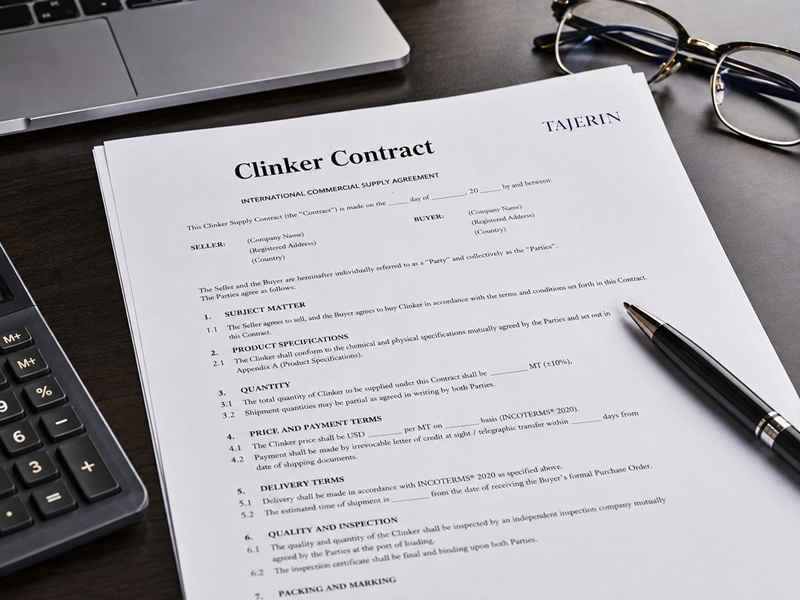
A Force Majeure clause should not encourage either party to simply stop performing the contract.
The affected party should normally take reasonable steps to reduce the disruption. For instance, the parties may consider alternative dates, ports, or vessel arrangements.
Depending on the transaction, mitigation may include:
The available alternatives depend on the commercial terms and the nature of the event.
Another common misunderstanding is that Force Majeure immediately terminates the contract. However, many contracts first allow suspension or extension before termination.
Usually, a well-structured clause first suspends or extends affected obligations.
For example, the clause may provide that:
This structure helps prevent premature cancellation of a transaction that may still be commercially viable.
The contract should specify what happens if the event continues for too long. Therefore, the termination period should be clear from the beginning.
For example, the parties may agree that if the Force Majeure situation continues beyond a certain number of days, either party may terminate the affected portion of the contract.
The clause should also address:
The correct structure depends on the transaction.
International trade may also be affected by sanctions, banking restrictions or government regulations.
These issues should not automatically be treated as ordinary Force Majeure.
The contract may need a separate sanctions or compliance provision.
For example, the parties may need to consider whether:
This area requires particular care because commercial inconvenience and legal prohibition are not the same thing.
A Force Majeure clause should not be reviewed in isolation.
It should be consistent with the rest of the clinker contract, especially:
A contract can become confusing when one section extends the shipment period while another section still imposes the original deadline.
Suppose a buyer purchases:
Quantity: 50,000 MT clinker
Delivery: FOB
Shipment period: 1–15 June
Payment: Letter of Credit
The buyer nominates a vessel for 10 June.
On 8 June, the port authority temporarily closes the loading terminal because of a major emergency.
A properly drafted Force Majeure clause should help answer:
Without clear contract language, these questions may become a commercial dispute.
Before signing, buyers should review the Force Majeure section carefully.
Ask:
These questions are much easier to resolve before signing than during a disrupted shipment.
A good clinker purchase should not focus only on price per metric ton.
The commercial structure should also consider:
Force Majeure is one part of that structure.
Clear commercial terms help both buyer and seller understand what happens when normal performance becomes impossible.
Tajerin works with bulk buyers seeking clinker supply for cement production and international trade.
We review requirements such as:
Depending on the transaction, shipment can be structured under terms such as FOB, CFR or CIF, subject to commercial feasibility and available logistics arrangements.
Tajerin can also coordinate shipment requirements with logistics partners where required.
If you are planning a clinker purchase, send us your specifications, required quantity and destination.
Get a quotation from Tajerin, compare it with your other options, and choose the commercial terms that work best for your transaction.
A Force Majeure clause should not be treated as boilerplate in a clinker contract.
For bulk international transactions, the wording can affect shipment schedules, vessel costs, payment documents, contract extensions and termination rights.
The most useful clauses define the events clearly, require prompt notification, address evidence and mitigation, and explain exactly what happens to the parties’ obligations during the disruption.
Reviewing these points before signing can prevent uncertainty when a shipment faces an unexpected event.