
Address:
Etesami St, Ziba Shahr, Bandar Abbas
Whatsapp:
Email:
info@tajerin.com
Tajerin is a bitumen supplier serving road contractors, asphalt plants, distributors, construction companies, and bulk buyers looking for reliable bitumen supply.
However, buying bitumen is not only about finding the lowest price per metric ton. Buyers should first confirm the required grade, specification, packaging, quantity, destination, and delivery term.
Therefore, a clear request helps us prepare a more accurate and useful quotation.
Tajerin works with established supply sources and can review each inquiry based on the buyer’s technical and commercial requirements.
Send us your bitumen grade, specification, quantity, packaging and destination. Get a quotation from Tajerin, compare it with your other options, and choose the commercial terms that work best for your business.
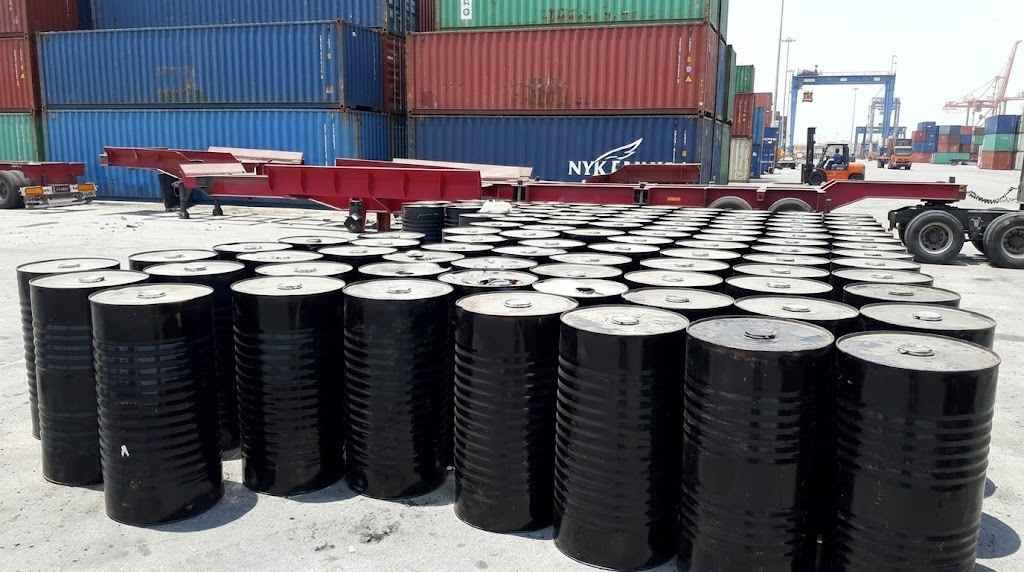
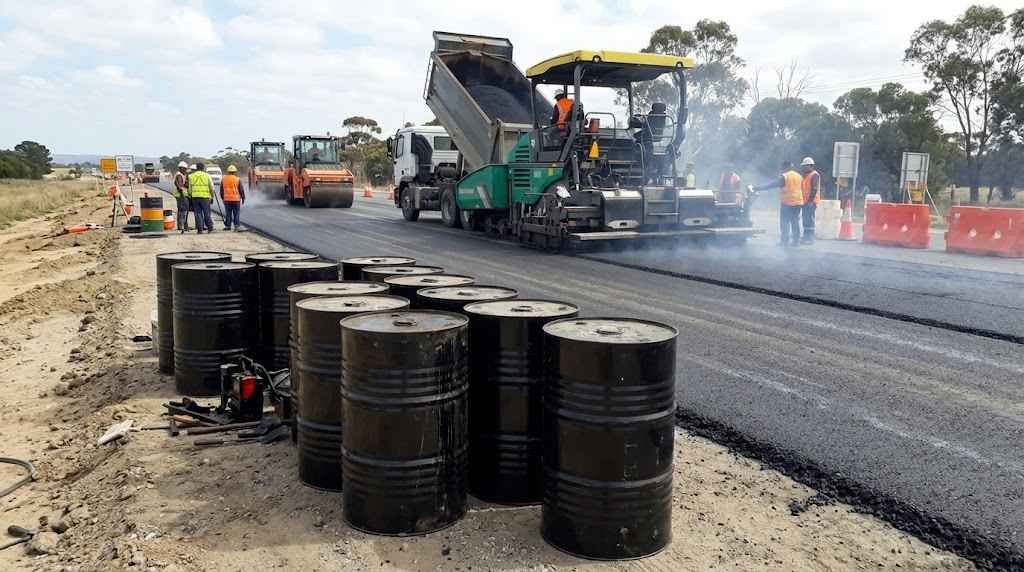
Bitumen is a dark, viscous petroleum-based material widely used in road construction, asphalt production, waterproofing, and several industrial applications. In road construction, bitumen acts as the binder that holds aggregates together in asphalt mixtures. As a result, its properties can directly affect:
However, different projects require different bitumen grades. For this reason, buyers should confirm the required grade before requesting a commercial offer.
One of the first questions a buyer should answer is:
Which bitumen grade does the project require?

Common commercial grades may include penetration-grade bitumen such as: Bitumen 40/50; Bitumen 60/70; Bitumen 80/100; and other specified grades. In addition, some markets may require viscosity-grade or performance-grade products. Therefore, the exact specification should always be confirmed according to the project, tender, or local standard.
Bitumen 60/70 is one of the commonly traded penetration grades for road and asphalt applications.
The numbers refer to the penetration range measured under specified test conditions.
However, buyers should not select the product based only on the grade name.
They should also review the full technical specification, including relevant test results and applicable standards.
Bitumen 80/100 has a different penetration range and may be required in certain climates or applications.
Depending on project conditions, it may behave differently from harder grades.
Therefore, the correct choice should come from the project specification rather than price preference alone.
A professional bitumen supplier should provide technical information relevant to the offered grade. Depending on the product and standard, buyers may review parameters such as: penetration; softening point; ductility; flash point; specific gravity; solubility; loss on heating; viscosity; and other required properties.
However, the exact test requirements depend on the specified standard.
For this reason, the buyer should provide either: a technical specification; a tender requirement; or a previous acceptable Certificate of Analysis. This makes comparison between suppliers much easier.
Different markets may follow different standards.

For example, a project may refer to: ASTM; EN; local road authority specifications; government tender requirements; or project-specific standards. Therefore, asking only for “60/70 bitumen” may not always be enough. The buyer should also specify the required standard or test method where applicable.
Bitumen performance is influenced by climate, pavement design, traffic load, asphalt mix, and construction conditions. For example, a grade suitable for one climate may not be the best option for another. Therefore, buyers should confirm the correct grade with the project engineer or technical specification before placing an order. Choosing the wrong grade can create performance problems even if the material is competitively priced.
A Certificate of Analysis, or COA, helps the buyer review whether the offered bitumen matches the required specification. Depending on the grade, the COA may include:

penetration; softening point; ductility; flash point; specific gravity; solubility; and other test results. However, the buyer should compare these values with the actual project requirements. A COA is useful only when it is relevant to the specified grade and standard.
For larger transactions, independent inspection may be requested. Depending on the contract, inspection can cover: sampling; laboratory testing; quantity verification; drum condition; loading supervision; and document verification. Moreover, the inspection method should be agreed before loading. This helps both parties understand how product conformity will be checked.
Steel drums are one of the common export packaging methods for bitumen. They are widely used because they are relatively simple to handle, store, transport, and distribute. Common drum options may differ in: net weight; steel thickness; drum dimensions; palletization; and loading configuration. Therefore, buyers should specify the exact packaging requirement where possible.
For example:
Packaging: New steel drums, 180 kg net is much more useful than simply saying: “Need drum bitumen.”
Bitumen drums can be produced in different sizes and net weights. Common commercial requests may involve drums around 150 kg to 200 kg net, depending on source and market. However, buyers should confirm: net bitumen weight; gross drum weight; number of drums; container loading quantity; and packaging specification.
As a result, both the commercial price and logistics calculation become more accurate.
Jumbo bags may be suitable for some buyers and markets. They can reduce the number of individual packages compared with drums. However, the buyer must consider: unloading equipment; storage conditions; handling method; temperature; bag design; and local operating conditions.
Therefore, jumbo bags should be selected only when the destination has suitable handling facilities.
For larger industrial requirements, bulk bitumen may be more efficient.

However, bulk supply requires proper infrastructure. This may include: heated storage tanks; tank trucks; loading systems; discharge pumps; insulated equipment; and temperature control. As a result, bulk bitumen is most suitable for buyers that already have compatible receiving facilities.
Neither packaging option is automatically better. Drums may be more suitable when: the buyer lacks heated tanks; the product will be distributed to several customers; smaller handling units are useful; or storage infrastructure is limited. By contrast, bulk supply may be more efficient when: consumption is high; proper tanks are available; the buyer operates an asphalt plant; or continuous supply is needed. Therefore, buyers should compare total handling and logistics cost rather than only packaging cost.
Packaging quality can affect the final delivered condition of the cargo. Poor-quality drums may create problems such as: leakage; deformation; damaged lids; handling losses; container contamination; and unloading difficulties. Therefore, buyers should consider drum strength and loading quality when comparing quotations. A slightly cheaper price can become expensive if packaging creates losses at destination.
There is no single global bitumen price. The final commercial price may depend on: grade; specification; packaging; order quantity; crude-oil and refinery market conditions; production source; inland transport; drum cost; loading cost; ocean freight; destination; payment terms; and Incoterm. Therefore, buyers should compare quotations on the same basis.
For example: FOB vs FOB or: CFR destination vs CFR destination
provides a more meaningful comparison.
Suppose one supplier offers a lower ex-factory price.
However, the offer may involve:
Another supplier may offer a slightly higher base price but a better complete commercial package. As a result, the second offer may produce a lower total landed cost. Therefore, buyers should evaluate the complete transaction rather than only the headline price.
Under an FOB structure, the buyer normally arranges the main ocean freight from the agreed loading port.
Therefore, the quotation should clearly identify: bitumen grade; packaging; quantity; loading port; shipment period; container or vessel arrangement; and documentation. Moreover, buyers should confirm the exact responsibilities under the agreed Incoterm before the transaction is finalized.
Under CFR, the seller arranges and pays the main ocean freight to the named destination port according to the applicable Incoterm.
Therefore, the destination port must be clearly stated.
For example: CFR Mombasa is much more useful than: CFR Africa because freight cost depends heavily on route, carrier, shipment size, and container availability.
Under CIF, the seller also arranges insurance according to the applicable Incoterm requirements.
However, buyers should still check: destination charges; port handling; customs; unloading; inland transportation; and local taxes.
Therefore, a CIF price should not automatically be considered the final delivered cost.
Bitumen logistics depends heavily on the packaging method. For drum bitumen, buyers should consider: container payload; number of drums per container; drum dimensions; loading pattern; container condition; and unloading method.
For bulk bitumen, the logistics structure is completely different. Therefore, the shipping method should be confirmed before the final quotation is prepared. Tajerin can coordinate logistics requirements with suitable partners where needed.
Container utilization can affect the final cost per metric ton.
A difference in:
can change freight cost per ton. Therefore, buyers should ask how many net metric tons are expected in each container. This helps them compare offers more accurately.
Bitumen requires proper storage and handling. For drum bitumen, buyers should normally store drums: away from direct damage; in suitable stacking conditions; protected from unnecessary contamination; and according to local safety procedures.
For bulk bitumen, temperature control is especially important. Therefore, the receiving facility should be prepared before the cargo arrives.
Road contractors usually focus heavily on technical compliance and project schedule.
Before buying, they should confirm: required grade; applicable standard; project quantity; delivery schedule; packaging; testing requirements; and destination conditions. Moreover, late delivery can create significant project delays. Therefore, supply schedule should be considered alongside price.
Asphalt plants may require consistent and repeatable bitumen quality.
In addition, they often need predictable supply because bitumen is a continuous production input.
For these buyers, important issues may include: grade consistency; delivery frequency; storage capacity; bulk or drum handling; and compatibility with existing equipment. Therefore, procurement planning is especially important.
For additional technical information about asphalt binders and pavement applications, buyers can also review guidance from the Federal Highway Administration (FHWA).
Distributors may have different commercial priorities. For example, they may care about: drum appearance; drum weight; brand labeling; packaging durability; repeat availability; and resale conditions.
Therefore, distributors should clearly explain their destination-market requirements before requesting a quotation.
Before choosing a bitumen supplier, buyers should compare several factors.
Is the offered grade exactly what the project requires?
Does the COA comply with the required standard?
Are the drums, jumbo bags, or bulk conditions suitable?
Is the actual net bitumen quantity clearly stated?
Can the supplier provide the required volume on schedule?
Are loading, freight, and destination arrangements practical?
Can the required shipping and technical documents be provided?
Are the commercial terms acceptable? Ultimately, a strong offer combines technical compliance, suitable packaging, reliable logistics, and competitive pricing.
Depending on the transaction, documents may include: commercial invoice; packing list; bill of lading; Certificate of Origin; Certificate of Analysis; weight certificate; inspection certificate; insurance document where applicable; and other destination-specific documents.
However, buyers should confirm the exact document list before finalizing payment conditions. This is especially important when a Letter of Credit is involved.
Payment structure depends on the transaction.
Possible options may include: Letter of Credit; advance payment arrangements; partial advance and balance; or other mutually agreed terms.
However, payment terms should be agreed before shipment planning begins.
Moreover, for LC transactions, document requirements should be reviewed carefully to avoid unnecessary discrepancies.
To prepare a useful quotation, please provide: bitumen grade; required standard; quantity in MT; packaging type; drum net weight if applicable; destination port/country; preferred Incoterm; shipment period; inspection requirements; and payment preference.
For example:
Product: Bitumen
Grade: 60/70
Quantity: 2,000 MT
Packaging: New steel drums, 180 kg net
Destination: Mombasa, Kenya
Delivery: CFR
Shipment: December
Payment: LC
With this information, a bitumen supplier can prepare a much more meaningful offer.
Before asking for a quotation, make sure you can answer these five questions:
If you know these five items, you are much closer to receiving quotations that can be compared properly. If you are unsure about the required grade, check the project specification, tender document, engineer’s requirement, or local road authority standard before ordering.
Tajerin operates as a trading and supply company with access to supply sources and producers.
For each inquiry, we review: grade; specification; quantity; packaging; destination; shipment schedule; payment terms; inspection requirements; and logistics conditions.
Where required, Tajerin can also coordinate transportation with logistics partners.
Our objective is not simply to provide a number.
Instead, we aim to prepare a commercially workable quotation that the buyer can compare with other available options.
Send the required grade, standard, quantity, packaging, destination, shipment period, and preferred delivery term.
It refers to a penetration-grade classification. The exact product should still be checked against the applicable technical specification.
Not necessarily. The correct grade depends on the project, climate, pavement design, and applicable specification.
Yes. Steel drums are commonly used for international bitumen shipments, especially where bulk receiving infrastructure is unavailable.
Yes, where suitable heated storage, transportation, and discharge systems are available.
Depending on source, destination, and shipment conditions, Tajerin can review different delivery structures.
Yes. Inspection requirements can be agreed before shipment.
It depends on the Incoterm. FOB, CFR, CIF, and other delivery terms include different costs and responsibilities.
If you are looking for a bitumen supplier, send Tajerin your complete requirement.
At minimum, provide:
Grade + Specification + Quantity + Packaging + Destination + Delivery Term