Welcome to Tajerin Trading Company



Address:
Etesami St, Ziba Shahr, Bandar Abbas
Whatsapp:
Email:
info@tajerin.com
Tajerin is a steel rebar supplier serving contractors, distributors, construction companies, infrastructure projects, and bulk buyers looking for reliable reinforcement steel supply.
However, buying rebar involves more than comparing the price per metric ton. Buyers should first confirm the required standard, steel grade, diameter, length, quantity, destination, and delivery terms.
Therefore, a clear technical inquiry helps suppliers prepare quotations that can actually be compared.
Tajerin works with established supply sources and can review requirements according to specification, quantity, destination, and commercial conditions.
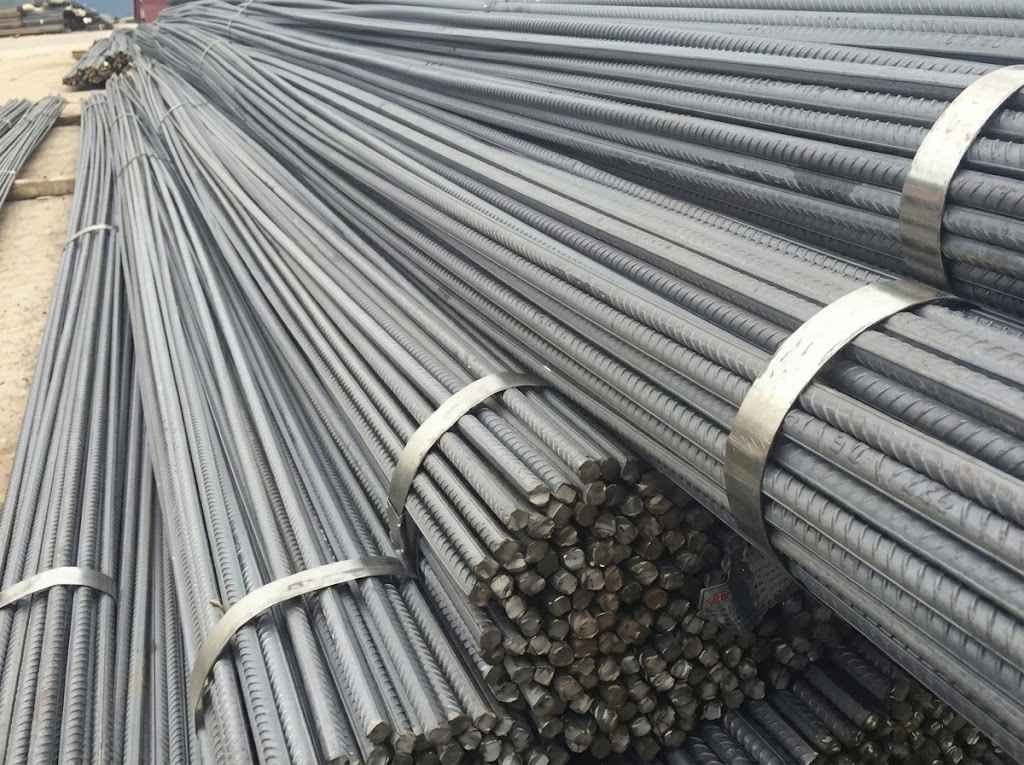
Send us your rebar grade, standard, diameter, quantity and destination. Get a quotation from Tajerin, compare it with your other options, and choose the commercial terms that work best for your project.
Steel reinforcing bar, commonly called rebar, is used to reinforce concrete structures.
Concrete performs well under compression but has limited tensile strength. Rebar is therefore installed inside reinforced concrete to help resist tensile forces and improve structural performance.
For example, steel rebar is widely used in:
However, not every rebar product is suitable for every project.
The required grade, diameter, mechanical properties, and standard should match the structural design.
One of the first things a buyer should determine is the required steel grade and standard.
Depending on the destination and project, rebar may be specified according to standards such as:
Therefore, an inquiry should ideally include the exact standard required by the engineer or consultant.
Simply requesting “construction steel” or “rebar” may not provide enough information for an accurate quotation.
Buyers working with ASTM-based specifications can also review reinforcement steel standards published by ASTM International.
Different markets use different grade designations.
For example, buyers may encounter:
However, these names should not be considered interchangeable.

Each standard may define different requirements for:
Therefore, buyers should provide the complete grade designation whenever possible.
The grade indicates important mechanical characteristics of reinforcing steel.
In particular, engineers select reinforcement according to structural calculations and applicable building codes.
Using a higher grade does not automatically mean that the material is more suitable.
Instead, the supplied rebar must comply with the approved structural specification.
For this reason, buyers should never change the specified rebar grade based only on price without technical approval.
Rebar is manufactured in different diameters to meet various structural requirements.
Typical commercial sizes may include:
8 mm, 10 mm, 12 mm, 14 mm, 16 mm, 18 mm, 20 mm, 22 mm, 25 mm, 28 mm, 32 mm and larger diameters.
However, available sizes depend on the manufacturer and applicable standard.
Therefore, a buyer requesting several sizes should provide the required tonnage for each diameter.
For example:
12 mm – 100 MT
16 mm – 250 MT
20 mm – 200 MT
This is much more useful than simply requesting:
550 MT assorted rebar
Standard commercial rebar lengths often depend on the market and manufacturer.
A common requirement may be 12-meter bars, although other lengths can also be requested.
Therefore, buyers should specify the required bar length in the RFQ.
This becomes especially important when:
Steel rebar and Portland cement are two key materials used together in reinforced concrete construction.

Most structural reinforcement applications use deformed rebar.
The ribs on the steel surface improve the bond between the reinforcement and surrounding concrete.
By contrast, plain round bars have a smooth surface and may be used for different applications depending on the engineering design.
Therefore, buyers should clearly distinguish between:
Deformed Rebar
and
Plain Round Bar
when requesting a quotation.
A reliable steel rebar supplier should provide technical information relevant to the required standard.
Depending on the product, buyers may need to review:
However, not every parameter applies in the same way to every standard.
For this reason, the project specification should be the main reference.
One of the most important documents for rebar buyers is the Mill Test Certificate, often called an MTC or Mill Certificate.
It may contain information such as:
Therefore, buyers should confirm that the certificate corresponds to the material supplied.
For large construction projects, traceability between the bars and relevant production batches may also be important.
Some projects require third-party inspection before shipment.
Depending on the contract, inspection may include:
Moreover, buyers should define the inspection procedure before shipment.
This avoids disagreements about testing methods or acceptance criteria later.
Steel rebar is normally traded by weight.
However, construction projects often begin with a bar schedule or quantity by diameter.
Therefore, buyers should verify the relationship between:
Small differences in unit weight can become commercially significant when thousands of tons are involved.
As a result, the applicable weight tolerance should also be understood.
Buyers may encounter quotations based on theoretical weight or actual scale weight.
These are not always identical.
For this reason, the contract should clearly state how invoiced quantity will be determined.
For example, parties may agree to use:
Clarifying this point before shipment can prevent quantity disputes.
Rebar is commonly supplied in bundles.
Depending on the manufacturer, each bundle may include identification showing information such as:
Proper bundling also makes loading, unloading, counting, and storage easier.
Therefore, buyers should mention any specific packaging or bundle-marking requirements before ordering.

There is no single global rebar price.
The commercial price can change according to:
Therefore, two rebar prices should only be compared when the commercial basis is similar.
For example:
FOB vs FOB
or
CFR Jebel Ali vs CFR Jebel Ali
provides a more meaningful comparison.
A lower price per ton may initially appear attractive.
However, the buyer should also check:
For example, a cheaper offer with an unsuitable standard has little value for a project that requires approved reinforcement.
Therefore, technical compliance should come before price comparison.
Bulk buyers usually benefit from providing a detailed quantity breakdown.
Instead of requesting only:
1,000 MT steel rebar
the RFQ should ideally state something like:
10 mm – 100 MT
12 mm – 200 MT
16 mm – 300 MT
20 mm – 250 MT
25 mm – 150 MT
As a result, Tajerin can review availability and pricing much more accurately.
Diameter distribution can also affect production planning and loading.
Contractors should purchase reinforcement according to approved structural drawings and specifications.
Before placing an order, they should confirm:
Moreover, delivery timing can be important because excessive inventory may occupy valuable construction-site space.
Therefore, large projects may benefit from staged deliveries.
Tajerin also supplies gypsum powder and limestone for construction and industrial applications.
Steel distributors may have different priorities.
For instance, they may require:
In this case, the commercial relationship may be based on repeated orders rather than a single project shipment.
Therefore, distributors should share expected monthly or annual demand where possible.
Infrastructure projects may involve substantial quantities of reinforcement steel.
In addition, documentation and approval procedures can be stricter than ordinary commercial purchases.
Buyers may need:
Therefore, these requirements should be communicated before a quotation is finalized.

Under an FOB arrangement, the commercial quotation should clearly identify the loading port and applicable Incoterm.
Important details may include:
Moreover, the buyer should evaluate ocean freight separately when comparing the total procurement cost.
Under CFR terms, the seller arranges the main ocean freight to the named destination port according to the applicable Incoterm.
Therefore, the buyer should provide the exact port.
For example:
CFR Mombasa
is much more useful than:
CFR East Africa
because freight differs significantly by destination.
CIF includes the main carriage and insurance according to the applicable Incoterm requirements.
However, the buyer should still calculate destination expenses separately.
These may include:
Therefore, CIF should not automatically be considered the final delivered project cost.
Rebar is heavy cargo, so freight can represent a significant part of landed cost.
Depending on quantity and route, shipment may involve:
Therefore, logistics should be evaluated alongside the product price.
Tajerin can coordinate shipment requirements with logistics partners where necessary.
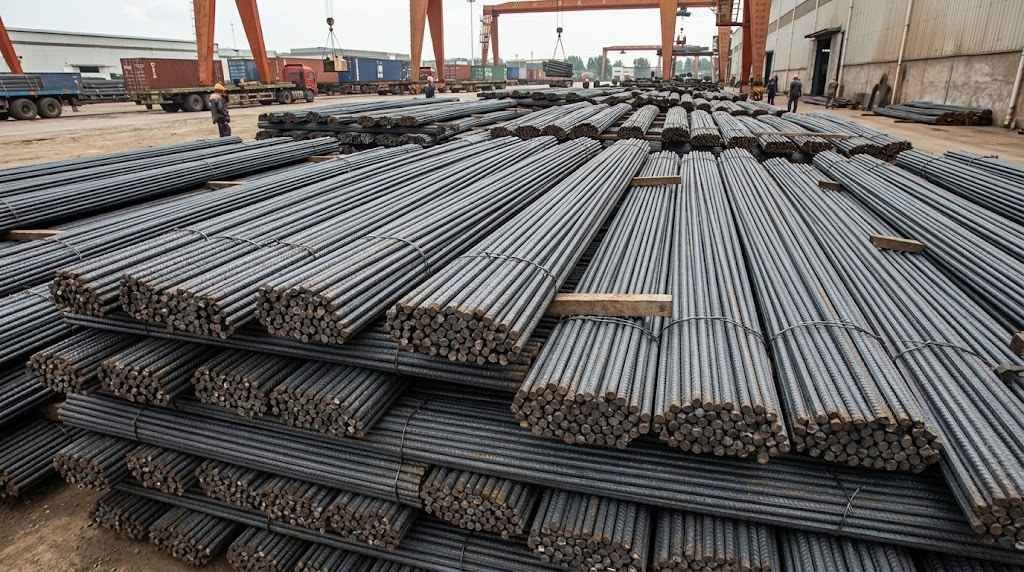
Containers may be suitable for smaller or medium-sized shipments, depending on bar length and destination.
However, payload limitations and loading configuration must be considered.
For example, a buyer should understand:
As a result, comparing freight per container alone may be misleading.
The more useful figure is often freight cost per net metric ton.
For large quantities, breakbulk shipment may be commercially attractive on certain routes.
However, suitability depends on:
Therefore, both container and breakbulk options should be compared when volumes justify it.
Rebar should be stored in an organized way to maintain identification and simplify handling.
Where possible, buyers should:
Surface rust does not always mean reinforcement is unusable; however, significant corrosion or section loss may be unacceptable.
Therefore, project specifications should define acceptable material condition.
Before choosing a steel rebar supplier, buyers should compare more than the quoted price.
Does the material comply with the required standard?
Is the correct strength grade being offered?
Are all required sizes available?
Can the supplier provide the necessary technical documentation?
Can the required tonnage be supplied according to schedule?
Can required testing or third-party inspection be arranged?

Is the proposed shipment method practical and economical?
Are the payment and delivery conditions workable?
Ultimately, the best offer is one that combines technical compliance, reliable availability, practical logistics, and competitive commercial terms.
Depending on the transaction, buyers may require:
However, the exact document requirements should be agreed before shipment.
This is especially important when payment involves a Letter of Credit.
Payment structure depends on the transaction, supplier, quantity, and buyer profile.
Possible arrangements may include:
Nevertheless, both parties should confirm payment requirements before production or shipment planning begins.
For LC transactions, document wording should also be reviewed carefully.
To receive a meaningful quotation, provide:
For example:
Product: Deformed Steel Rebar
Grade: B500B
Standard: EN requirement
Diameters: 12 / 16 / 20 / 25 mm
Quantity: 1,500 MT
Length: 12 meters
Destination: Jebel Ali, UAE
Delivery: CFR
Shipment: December
Inspection: Third party if required
Payment: LC
With this information, a steel rebar supplier can evaluate the requirement much more accurately.
Before asking for a quotation, make sure you can answer these questions:
If you know these points, supplier quotations become much easier to compare.
However, if the project specification is unclear, confirm it with the structural engineer or consultant before ordering.
Tajerin works as a trading and supply company with access to established steel supply sources.
For each inquiry, we review:
In addition, Tajerin can coordinate transportation with logistics partners when needed.
Our objective is to provide a commercially workable offer rather than simply quoting a price per ton.
Send the required standard, grade, diameters, quantities, bar length, destination, shipment period, and delivery term.
The correct grade should follow the structural design, applicable building code, and project specification.
Twelve-meter bars are common in many markets, although requirements and availability vary.
No. They belong to different standards and should not automatically be treated as equivalent.
Depending on source availability, mixed-diameter orders can be reviewed. Buyers should provide the tonnage required for each size.
Yes, depending on bar length, quantity, route, payload restrictions, and loading conditions.
Yes. For suitable volumes and routes, breakbulk shipment may be considered.
Yes. Inspection and testing requirements can be agreed before shipment.
If you are looking for a steel rebar supplier, send Tajerin your technical and commercial requirements.
At minimum, provide:
Standard + Grade + Diameters + Quantity + Length + Destination + Delivery Term