
Address:
Etesami St, Ziba Shahr, Bandar Abbas
Whatsapp:
Email:
info@tajerin.com
Tajerin is a White Cement supplier serving construction companies, distributors, dry-mix producers, tile-adhesive manufacturers, precast producers, architectural projects, and export buyers.
However, white cement should not be purchased only by comparing price per metric ton. Buyers should also review whiteness, strength class, fineness, setting time, application, packaging, quantity, destination, and delivery term.
Therefore, a clear technical inquiry helps suppliers prepare quotations that can be compared properly.
Tajerin works with established production sources and can review each request according to technical requirements, required volume, packaging, destination, shipment schedule, and commercial conditions.
For general structural applications, buyers may also compare Ordinary Portland Cement with white cement based on project requirements.
Send us your white cement specification, quantity, packaging and destination. Get a quotation from Tajerin, compare it with your other options, and choose the commercial terms that work best for your business.

White cement is a type of Portland cement manufactured to achieve a high degree of whiteness while maintaining the required cement performance.
Its white appearance is achieved mainly by controlling raw materials and limiting colouring compounds during production.
As a result, white cement is commonly used where both appearance and cement performance matter.
Typical applications include:
However, not all white cement products are identical.
Therefore, buyers should check both technical performance and visual characteristics.
A professional White Cement supplier should provide technical information relevant to the intended application.
Depending on the standard and end use, buyers may review:
However, not every buyer needs the same specification.
For this reason, the intended application should be clearly stated when requesting a quotation.
Whiteness is one of the main characteristics that distinguishes white cement from ordinary grey cement.
For decorative and architectural applications, colour consistency can directly affect the appearance of the finished product.
Therefore, buyers may need to evaluate:
In particular, manufacturers of decorative products may require consistent appearance across multiple production batches.
As a result, visual consistency can be just as important as mechanical performance.
White cement may be available in different strength classes depending on the manufacturer and applicable standard.
However, buyers should not assume that all white cement products provide the same performance.
The correct strength class should match:
Therefore, strength should be reviewed separately from whiteness.
A cement with excellent colour but unsuitable strength may not meet the application requirement.
Different markets may follow different cement standards.
Depending on destination and application, buyers may encounter:
Therefore, the buyer should provide the required standard whenever possible.
A general request such as:
“Need white cement”
may not be enough for a technical quotation.
A more useful inquiry should include the required grade or standard.

Architectural concrete often requires both structural performance and visual quality.
Therefore, white cement can be used where designers want:
However, the final appearance also depends on:
For this reason, white cement alone does not determine the final colour.
Decorative concrete producers may require stable colour and predictable performance.
For example, they may manufacture:
Therefore, these buyers may focus closely on:
Moreover, repeated supply from a consistent source may be important for maintaining product appearance.

Tile-adhesive manufacturers may use white cement in formulations where final colour, bonding performance, and product appearance are important.
Depending on the formulation, buyers may consider:
Therefore, manufacturers should test the offered cement within their own formulation before switching production sources.
A small difference in raw material performance can affect a finished dry-mix product.
White cement is also used in various dry-mix products.
For example, applications may include:
However, each formulation has different technical requirements.
Therefore, dry-mix producers should provide their required cement specification rather than purchasing only by brand or price.
White cement can be used in grout formulations where appearance matters.
For example, it may provide a suitable base for white or coloured grout products.
However, grout performance also depends on:
Therefore, white cement should be evaluated as one component of the full product system.
Precast manufacturers may use white cement for products where visible appearance is an important selling point.
Typical examples may include:
Therefore, manufacturers often require consistency between batches.
In addition, early strength may matter where molds need to be reused quickly.
Artificial-stone manufacturers may use white cement as a binder in combination with aggregates, pigments, fillers, and additives.
For these buyers, important factors may include:
Therefore, a supplier should be evaluated based on both technical results and production stability.
A single good-looking sample is not enough for a long-term supply relationship.
For manufacturers producing decorative products, batch variation can create visible colour differences in finished goods.
Therefore, buyers should consider:
This is especially important when the end product is sold based partly on visual appearance.
White cement provides a light base for producing coloured cementitious materials.
As a result, pigments may appear brighter and more controlled than when used with grey cement.
However, pigment performance depends on formulation.
Therefore, manufacturers should test:
In practice, laboratory or production trials may be useful before a large commercial order.
White cement and ordinary grey cement can perform similar binding functions, but they are produced for different visual requirements.
Grey cement is generally selected where appearance is not a primary concern.
By contrast, white cement is used when colour, brightness, architectural finish, or pigment control matters.
Therefore, white cement usually serves a more specialized market.
However, the buyer should still select it according to technical requirements rather than appearance alone.
A Certificate of Analysis, or COA, helps buyers review the technical characteristics of the offered product.
Depending on the applicable specification, it may include:
However, buyers should compare the COA with their own application requirements.
A certificate becomes more useful when it contains the parameters that actually matter to the buyer.
For specialized applications, a sample can be useful before placing a larger order.
For example, manufacturers may test white cement for:
Therefore, trial testing may reduce the risk of changing raw-material sources.
Moreover, a successful laboratory test does not always guarantee identical large-scale production results, so production validation may also be useful.
For commercial or project-based orders, buyers may request independent inspection.
Depending on the transaction, inspection may include:
Therefore, the inspection procedure should be agreed before shipment.
This is especially useful when technical acceptance forms part of the purchase contract.
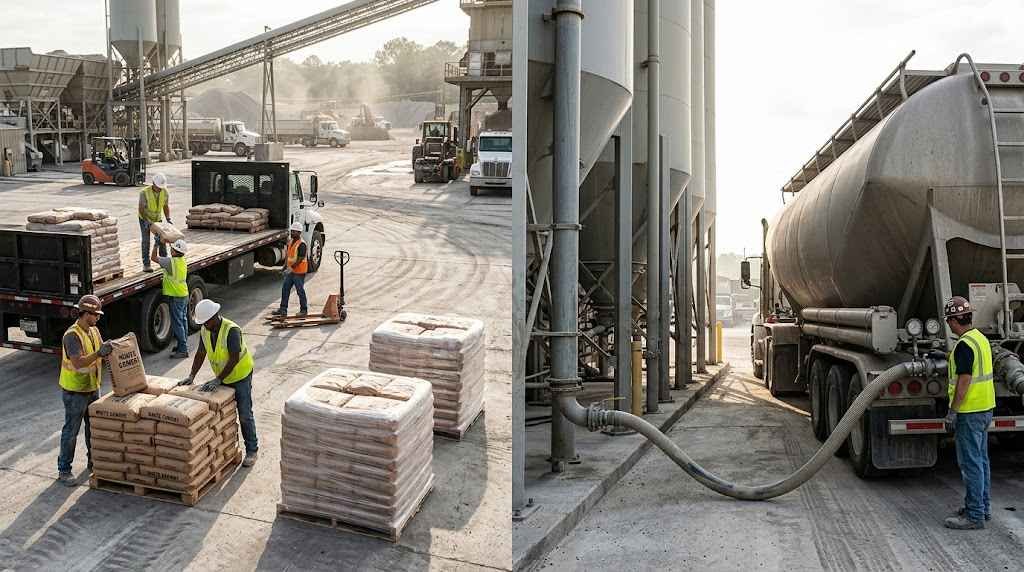
White cement is commonly supplied in bags.
Possible bag sizes may include:
However, actual packaging depends on the production source.
Therefore, buyers should state the required bag weight before requesting a quotation.
For example:
Packaging: 25 kg bags
is much clearer than:
“Need bagged white cement.”

Packaging is especially important because white cement is sensitive to moisture and contamination.
Poor packaging may cause:
Therefore, buyers should consider bag quality when comparing commercial offers.
In addition, packaging design may matter for distributors selling directly into retail or construction markets.
Some large industrial buyers may require white cement in bulk.
Bulk supply may be useful for:
However, buyers need appropriate storage and receiving systems.
Therefore, bulk supply is usually practical only where suitable silos and unloading equipment are available.
Bagged white cement may be more suitable when:
By contrast, bulk supply may work better when:
Therefore, buyers should consider the complete operating cost rather than only packaging cost.
There is no single global white cement price.
Commercial pricing may depend on:
Therefore, quotations should be compared on the same commercial basis.
For example:
FOB vs FOB
or:
CFR destination vs CFR destination
provides a more meaningful comparison.
White cement production generally requires tighter control over raw materials and production conditions in order to achieve the required colour.
In addition, production volumes and raw-material selection can differ from ordinary grey cement.
Therefore, white cement is often priced differently from standard grey Portland cement.
However, the relevant question for the buyer is not only the price difference.
The material must provide the appearance and technical performance required by the final product.

A lower price may initially look attractive.
However, buyers should also consider:
For example, inconsistent colour may create rejected decorative products or customer complaints.
Therefore, a small saving in raw material cost can become expensive later.
Under an FOB arrangement, the buyer normally arranges the main ocean freight from the agreed loading port.
Therefore, an FOB quotation should clearly state:
Moreover, the buyer should compare freight separately when calculating the total landed cost.
Under CFR terms, the seller arranges the main ocean freight to the named destination port according to the applicable Incoterm.
Therefore, the exact port should be provided.
For example:
CFR Jebel Ali
is much more useful than:
CFR UAE
because freight and handling depend on the actual destination.
Under CIF terms, insurance is also arranged according to the applicable Incoterm requirements.
However, buyers should still review:
Therefore, CIF does not automatically represent the final cost at the buyer’s warehouse or factory.
Logistics can materially affect the delivered cost of white cement.
For bagged shipments, buyers should consider:
Therefore, product price and logistics should be evaluated together.
Tajerin can coordinate transportation requirements with logistics partners where needed.
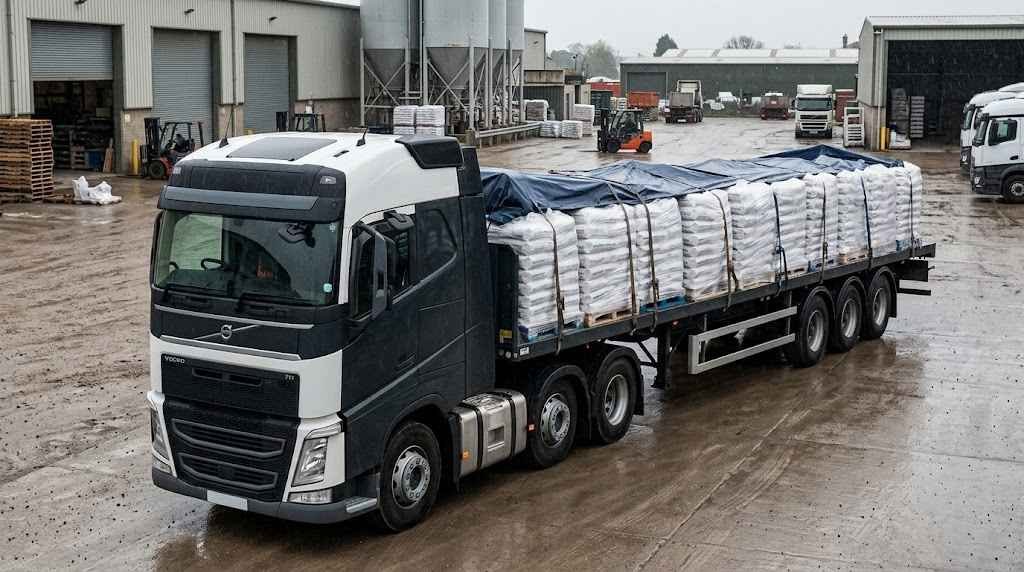
Containerized shipment is common for many bagged white cement orders.
However, buyers should compare freight based on net cement tonnage per container.
For example, the actual economics can change according to:
As a result, freight per container alone may not provide a fair comparison.
White cement must remain dry during transportation and storage.
Moisture can cause:
Therefore, containers and storage areas should be dry and suitable for cement cargo.
Moreover, damaged or wet bags should be identified during receiving inspection.
Bagged white cement should be stored in a clean, dry environment.
Where possible, buyers should:
The last point can be especially important for white cement.
Therefore, good storage practice helps preserve both performance and appearance.
Distributors may have different priorities from industrial manufacturers.
For example, they may focus on:
Therefore, distributors should provide information about their destination market and expected sales volume.
This can help identify a more suitable supply option.
Dry-mix manufacturers normally focus more on production consistency.
Therefore, they may evaluate:
Moreover, regular supply can be essential for continuous production.
As a result, long-term consistency may matter more than the lowest one-time price.
Precast and decorative manufacturers usually care about both technical performance and final appearance.
Therefore, supplier comparison should include:
Ultimately, a reliable raw-material source helps reduce production variation.

Before choosing a White Cement supplier, buyers should compare several factors.
Does the cement provide the required appearance and colour consistency?
Does the product meet the required strength class?
Does it comply with the required technical specification?
Has the cement been evaluated for the buyer’s actual use?
Can similar quality be maintained between shipments?
Is the bag size and packaging quality suitable?
Can the required COA and shipping documents be provided?
Can the material be delivered efficiently to the destination?
Are the price, payment terms, and delivery conditions workable?
Ultimately, the best offer combines appearance, technical performance, supply consistency, practical logistics, and competitive commercial terms.
Depending on the transaction, buyers may require:
However, buyers should agree on the required documents before shipment.
This becomes particularly important when payment is made through a Letter of Credit.
Payment terms depend on the supplier, buyer, quantity, destination, and commercial structure.
Possible arrangements may include:
Nevertheless, payment conditions should be clear before production and shipment planning.
Moreover, LC documentation requirements should be reviewed carefully before the credit is opened.
To receive a useful quotation, buyers should provide:
For example:
Product: White Cement
Application: Tile Adhesive Production
Strength Class: As per buyer specification
Whiteness: As required
Quantity: 1,000 MT
Packaging: 25 kg bags
Destination: Jebel Ali, UAE
Delivery: CFR
Shipment: December
Inspection: If required
Payment: LC
With this information, a White Cement supplier can prepare a much more relevant quotation.
Before requesting a quotation, make sure you can answer these questions:
If these points are clear, commercial offers become easier to compare.
However, manufacturers with specialized formulations should ideally test the product before committing to a large-volume purchase.
Tajerin operates as a trading and supply company with access to established cement production sources.
For each inquiry, we review:
In addition, Tajerin can coordinate transportation with logistics partners where required.
Our objective is not simply to provide a white cement price.
Instead, we aim to prepare a commercially workable quotation that buyers can compare with other available options.
White cement is commonly used in architectural concrete, decorative products, tile adhesive, dry-mix mortar, grout, precast products, terrazzo, and artificial stone.
Send your application, required standard, strength class, whiteness requirement, quantity, packaging, destination, and preferred delivery term.
Not necessarily. Colour and strength are separate characteristics. The required strength should follow the product or project specification.
Its colour results mainly from careful raw-material selection and production controls that limit compounds responsible for grey coloration.
No. Whiteness and colour consistency can vary between products and production sources.
Depending on production source and commercial conditions, 25 kg bags may be available.
Yes, where suitable loading, transport, storage, and receiving infrastructure is available.
Depending on source and commercial conditions, sample evaluation may be possible and can be useful for specialized manufacturing applications.
Depending on source, destination, quantity, and shipment conditions, Tajerin can review different delivery structures.
Yes. Inspection and testing requirements can be agreed before shipment.
If you are looking for a White Cement supplier, send Tajerin your technical and commercial requirements.
At minimum, provide:
Application + Standard + Strength Class + Whiteness Requirement + Quantity + Packaging + Destination + Delivery Term