Welcome to Tajerin Trading Company



Address:
Etesami St, Ziba Shahr, Bandar Abbas
Whatsapp:
Email:
info@tajerin.com
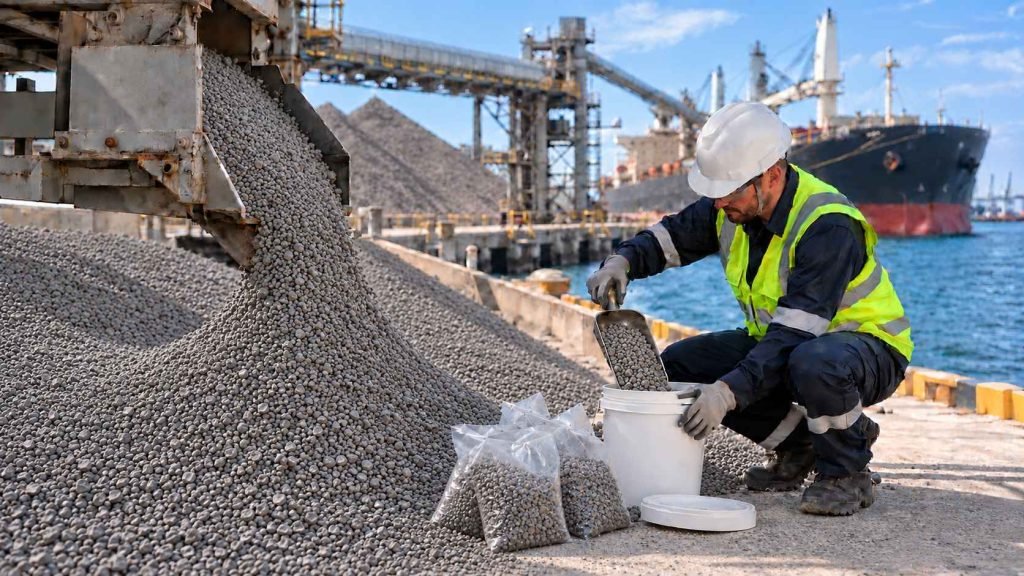
Clinker Quality Analysis helps buyers determine whether an offered product suits their cement plant before they commit to a shipment. Price matters, but chemical composition, mineral phases, consistency, sampling, and contract terms can affect the real value of every metric ton.
Therefore, buyers should review quality information before signing the contract, before nominating a vessel, and again during shipment sampling. A strong review connects the laboratory figures to the buyer’s intended cement type, grinding system, additives, plant conditions, and applicable product standard.
This guide explains how to read a clinker specification or Certificate of Analysis (COA), identify important values, ask useful questions, and reduce the risk of accepting unsuitable material.
Important: No single specification works for every buyer. Each transaction requires agreed limits, test methods, sampling rules, and remedies for non-compliance.
Two offers can look almost identical on a commercial comparison sheet. However, their clinker may differ in chemical balance, free lime, alkalis, chloride, phase composition, and production consistency. Those differences can influence grinding, gypsum demand, cement performance, and compliance with the buyer’s target standard.
Moreover, a low price does not always create the lowest production cost. For example, unsuitable clinker may require process adjustments, different additive rates, extra testing, or a change in the final cement blend. As a result, buyers should evaluate technical suitability together with price, freight, payment terms, and delivery risk.
A practical review should answer four questions:
Buyers often treat these documents as interchangeable. In practice, each one serves a different purpose.
First, a product specification sheet describes the quality that the supplier offers or agrees to supply. It normally lists target values, minimums, maximums, ranges, units, and test methods. Nevertheless, a general specification alone does not prove that a specific stockpile or shipment meets those figures.
Next, a Certificate of Analysis (COA) presents results for an identified sample, batch, stockpile, production period, or cargo. A useful COA normally includes:
Finally, an independent inspection report explains what a third-party inspector did. Depending on the agreed scope, the inspector may supervise sampling, prepare and seal samples, verify quantity, monitor loading, arrange laboratory testing, and check shipping documents.
Consequently, buyers should use these documents together. The specification defines the promise, the COA shows results for a sample, and the inspection report connects the sample to the shipment.

The chemical review usually begins with calcium oxide, silicon dioxide, aluminium oxide, and ferric oxide. Together, these four oxides strongly influence clinker mineralogy and the behaviour of Portland cement produced from it.
Buyers should also distinguish total CaO from free CaO. Total CaO covers all calcium oxide in the analysis, whereas free lime refers to the portion that did not combine into the main clinker phases.
Although the four main oxides provide the chemical foundation, several smaller components can create significant production or contractual issues.
Magnesium Oxide (MgO) requires comparison with the contract limit and the standard that governs the final cement. Therefore, buyers should not accept a result simply because it resembles a common market figure.
Sulfur Trioxide (SO₃) affects sulfur balance and can influence the grinding plant’s gypsum strategy. In addition, the buyer should confirm that the reported value applies to clinker rather than finished cement.
Sodium Oxide (Na₂O) and Potassium Oxide (K₂O) represent the main alkalis. Laboratories or plants may also calculate sodium oxide equivalent:
Na₂Oeq = Na₂O + 0.658 × K₂O
However, the acceptable alkali level depends on raw materials, cement requirements, and end use. Buyers should also check chemical notation carefully; Na₂O means sodium oxide, while N₂O identifies a completely different compound.
Chloride often appears at a low concentration. Even so, the contract should state a limit, unit, and test method whenever chloride affects acceptance.
Loss on Ignition (LOI) measures mass loss during a defined heating procedure. Storage exposure, carbonation, moisture, weathering, and test conditions can influence the result. Consequently, buyers should interpret LOI with the sample history rather than as an isolated verdict.
Insoluble Residue (IR) shows the portion that remains insoluble under the stated chemical method. If IR forms part of the acceptance criteria, the contract must identify its method, unit, and limit.
Free lime deserves particular attention because it provides information about the degree of combination during clinker formation. Nevertheless, one free-lime value cannot describe overall quality. Buyers should review it alongside the complete chemistry, production trend, sampling quality, and cement performance.
Ratios help buyers interpret oxide percentages as a chemical system rather than as separate numbers. The three common indicators are Lime Saturation Factor (LSF), Silica Modulus (SM), and Alumina Modulus (AM).
One commonly used LSF equation is:
LSF = 100 × CaO / (2.8SiO₂ + 1.18Al₂O₃ + 0.65Fe₂O₃)
However, plants and laboratories may use formulas that correct for SO₃, free lime, or other constituents. Therefore, the report should state the exact formula whenever LSF controls acceptance.
The silica modulus uses this equation:
SM = SiO₂ / (Al₂O₃ + Fe₂O₃)
Meanwhile, the alumina modulus compares alumina with iron oxide:
AM = Al₂O₃ / Fe₂O₃
For example, if SiO₂ equals 20.9%, Al₂O₃ equals 5.3%, and Fe₂O₃ equals 4.0%, the calculations produce:
If the supplier reports an LSF of 94.5 without showing the formula, the buyer should request the calculation basis. Otherwise, another laboratory may obtain a different figure from the same oxide results.
Clinker reports often show four principal phases:
| Phase | Common name | Practical significance |
|---|---|---|
| C₃S | Tricalcium silicate / Alite | Supports early strength development and hydrates relatively quickly |
| C₂S | Dicalcium silicate / Belite | Hydrates more slowly and contributes more at later ages |
| C₃A | Tricalcium aluminate | reacts quickly, affects heat release, and is particularly important when evaluating clinker for sulphate resistant cement production. |
| C₄AF | Tetracalcium aluminoferrite / Ferrite | Supports clinker formation and normally contributes less to strength than silicate phases |
Importantly, laboratories may calculate these percentages from oxide chemistry with Bogue equations, or they may measure phases with techniques such as quantitative X-ray diffraction. These approaches do not produce identical information.
Accordingly, every report should identify the method. The document should state whether the figures come from a Bogue calculation, XRD measurement, microscopy, or another defined procedure. Buyers should also note the correct spelling: Bogue Method, not “Bouge Method.”
The following table illustrates how a buyer can review an offered specification. The limits come from the example sheet used for this article; therefore, they do not represent universal limits for every clinker purchase.
| Parameter | Offered value (%) | Stated tolerance | Initial buyer review |
|---|---|---|---|
| SiO₂ | 20.9 | Max. 22 | Within the stated limit |
| Al₂O₃ | 5.3 | 5.3–6.0 | At the lower limit |
| Fe₂O₃ | 4.0 | 3.5–4.0 | At the upper limit |
| CaO | 65.0 | 64.5–65.5 | Within the stated range |
| MgO | 2.1 | Max. 2.1 | At the maximum |
| SO₃ | 1.2 | Max. 1.2 | At the maximum |
| K₂O | 1.0 | Max. 1.0 | At the maximum |
| Na₂O | 0.2 | Max. 0.3 | Within the stated limit |
| Chloride | 0.006 | Not stated | No contractual conclusion possible |
| LOI | 0.5 | Max. 1.0 | Within the stated limit |
| Insoluble Residue | 0.06 | Not stated | No contractual conclusion possible |
| Free Lime | 1.5 | Max. 2.0 | Within the stated limit |
| C₃S | 57 | 57–60 | At the lower limit |
| C₂S | 20 | Not stated | Informational unless parties agree on a limit |
| C₃A | 8 | 7.5–8.5 | Within the stated range |
| C₄AF | 11.5 | Not stated | Informational unless parties agree on a limit |
| LSF | 94.5 | Not stated | Formula and acceptance range required |
A boundary value can still comply with the written specification. However, it leaves no numerical margin for production variation, sampling variation, rounding, or differences between laboratories.
For instance, MgO at 2.1% against a maximum of 2.1% does not automatically mean failure. Still, the buyer should ask whether 2.1% represents a typical value or a guaranteed maximum, how recent production performed, which rounding rule applies, and which laboratory result controls a dispute.
Even an accurate laboratory result has limited value when the sample does not represent the cargo. Clinker can vary across production periods, storage areas, stockpiles, conveyors, trucks, barges, and vessel holds.
Therefore, the contract or inspection instruction should define:
For example, one grab sample from an easy-to-reach point may not represent an entire bulk shipment. By contrast, systematic increments collected throughout loading can produce a more useful composite sample.
In addition, the inspector should record the chain of custody. Clear records connect the final laboratory result to the correct cargo and reduce uncertainty during a claim.
The phrase “good-quality clinker” gives buyers very little contractual protection. Instead, the quality clause should define measurable limits and explain how the parties will determine compliance.
At minimum, buyers should consider these items:
Furthermore, the specification, sampling procedure, and remedy must work together. A list of chemical limits alone may not help the buyer if the contract does not explain who tests the cargo or what happens after a failed result.
Importers should pause and request clarification when they find any of these warning signs:
One warning sign does not prove that the clinker is unsuitable. Nevertheless, it tells the buyer to obtain stronger evidence before relying on the document.
Use this checklist before accepting a quality document or finalizing a shipment:
In short, this checklist turns a technical report into a purchasing control tool. It also helps commercial and technical teams discuss the same evidence before they approve the transaction.
Tajerin understands that buyers need more than a general claim that clinker has “high quality.” A useful discussion starts with the intended application, required specification, destination, quantity, inspection scope, and applicable test method.
Subject to product availability and workable commercial and logistics conditions, Tajerin can review an inquiry against available product information and coordinate the required transaction documents.
Therefore, buyers should include their chemical limits, preferred inspection procedure, test methods, order quantity, destination port, and delivery terms in the inquiry. Complete information allows both sides to evaluate compatibility before the transaction advances.
Effective Clinker Quality Analysis does not depend on one impressive number. Instead, it connects chemical composition, control ratios, clinker phases, sampling, laboratory evidence, contract limits, and remedies.
A specification tells the buyer what the seller offers. Meanwhile, a COA presents results for an identified sample, and an inspection report explains how the parties connected that sample to the shipment. Together, these documents create stronger evidence.
Ultimately, careful buyers ask more than, “Does this value meet the limit?” They also ask who tested the material, which sample the laboratory received, which method controlled the test, how close the result sits to the contractual boundary, and what remedy applies if the shipment fails.
That approach turns a laboratory table into a practical and defensible purchasing decision.
This article provides general educational information. It does not replace the buyer’s contract specification, applicable product standard, independent inspection, or laboratory advice.