Address:
Etesami St, Ziba Shahr, Bandar Abbas
Whatsapp:
Email:
info@tajerin.com

Clinker logistics can change the real cost of a shipment by several dollars per metric ton, even when two suppliers offer almost the same clinker price.
For bulk buyers, the factory price is only one part of the transaction. Loading rate, vessel size, port draft, cargo readiness, laytime, demurrage, discharge conditions and ocean freight can all affect the final cost.
Therefore, buyers should review logistics before they sign the clinker contract—not after the vessel arrives.
This guide explains the main logistics terms and practical points that clinker importers, cement plants and bulk buyers should understand before arranging a shipment.
Clinker is a high-volume commodity. A single shipment may involve tens of thousands of metric tons.
As a result, a small operational problem can become expensive very quickly.
For example, imagine that a vessel waits several extra days because:
In these situations, the product itself may still meet every quality requirement. However, the buyer or seller may face substantial additional costs.
Good clinker logistics therefore starts before vessel nomination.
The loading rate tells the parties how much cargo the terminal expects to load within a specified period.
For example:
Loading rate: 8,000 MT per weather working day
If the shipment contains 40,000 MT, the theoretical loading period would be about five working days, assuming the agreed conditions apply.
However, buyers should not treat a quoted loading rate as a guarantee without checking the details.
Ask:
A high loading rate looks attractive, but the complete loading conditions matter more than one number.
Every additional day that a vessel spends at the port can create costs.
Therefore, faster loading may reduce:
However, the parties should agree on realistic rates.
An unrealistic loading commitment may create more risk than a slightly lower but achievable rate.
Cargo readiness is one of the most important parts of bulk shipping.
Before the vessel arrives, the seller and logistics team should know whether the required clinker quantity is physically available for loading.
For example, if a contract requires 30,000 MT but only 12,000 MT is available at the port, the remaining cargo may need continuous delivery from the production source.
That situation creates additional risk.
Truck availability, road conditions, production schedules and port storage capacity can all affect the loading operation.
Therefore, buyers should ask:
A good logistics plan connects the factory, inland transportation, storage terminal and vessel as one system.
Not every port can handle every vessel.
Before vessel nomination, the parties should confirm technical restrictions such as:
A larger vessel may offer a lower freight rate per ton. However, that advantage disappears if the loading or destination port cannot accept the vessel.
For this reason, buyers should evaluate vessel economics together with port limitations.
Never assume that a larger vessel automatically means cheaper transportation.
Laytime is the amount of time allowed under the contract or charter party for loading or discharging the vessel.
It plays a major role in bulk commodity transactions.
The parties should clearly understand when laytime begins, when it stops, and which periods count toward the calculation.
For example, weather interruptions may or may not count depending on the agreed terms.
Likewise, weekends, holidays and waiting periods may receive different treatment.
Because laytime clauses can materially affect costs, buyers should read them carefully instead of treating them as shipping formalities.
Demurrage is a charge that may apply when loading or discharge takes longer than the allowed laytime.
For a large bulk carrier, demurrage can become a substantial cost.
Consider a simplified example:
The additional cost could reach:
USD 30,000
For a 30,000 MT clinker cargo, that equals an additional:
USD 1 per MT
This example shows why buyers should not compare clinker offers only by product price.
A quotation that looks USD 1 cheaper may lose its entire advantage because of poor loading performance.
The answer depends on the contract, charter party, Incoterm, cause of delay and agreed responsibilities.
Therefore, the parties should not rely on assumptions.
The contract should clearly define:
For significant shipments, parties should obtain appropriate commercial or legal review of the final contract terms.

Dispatch, sometimes written as despatch, works in the opposite direction from demurrage.
If the loading or discharge operation finishes faster than the allowed laytime, the charter arrangement may provide a dispatch payment.
However, not every contract includes dispatch.
The rate may also differ from the demurrage rate.
Therefore, buyers should check the actual charter or contract wording rather than assuming that early completion always creates a payment.
The Notice of Readiness, commonly called NOR, is an important document in vessel operations.
The vessel issues NOR to indicate that it has arrived and is ready to load or discharge according to the relevant contractual conditions.
The timing and validity of NOR can affect when laytime begins.
For this reason, both buyers and sellers should understand:
The exact rules depend on the contract and charter arrangement.
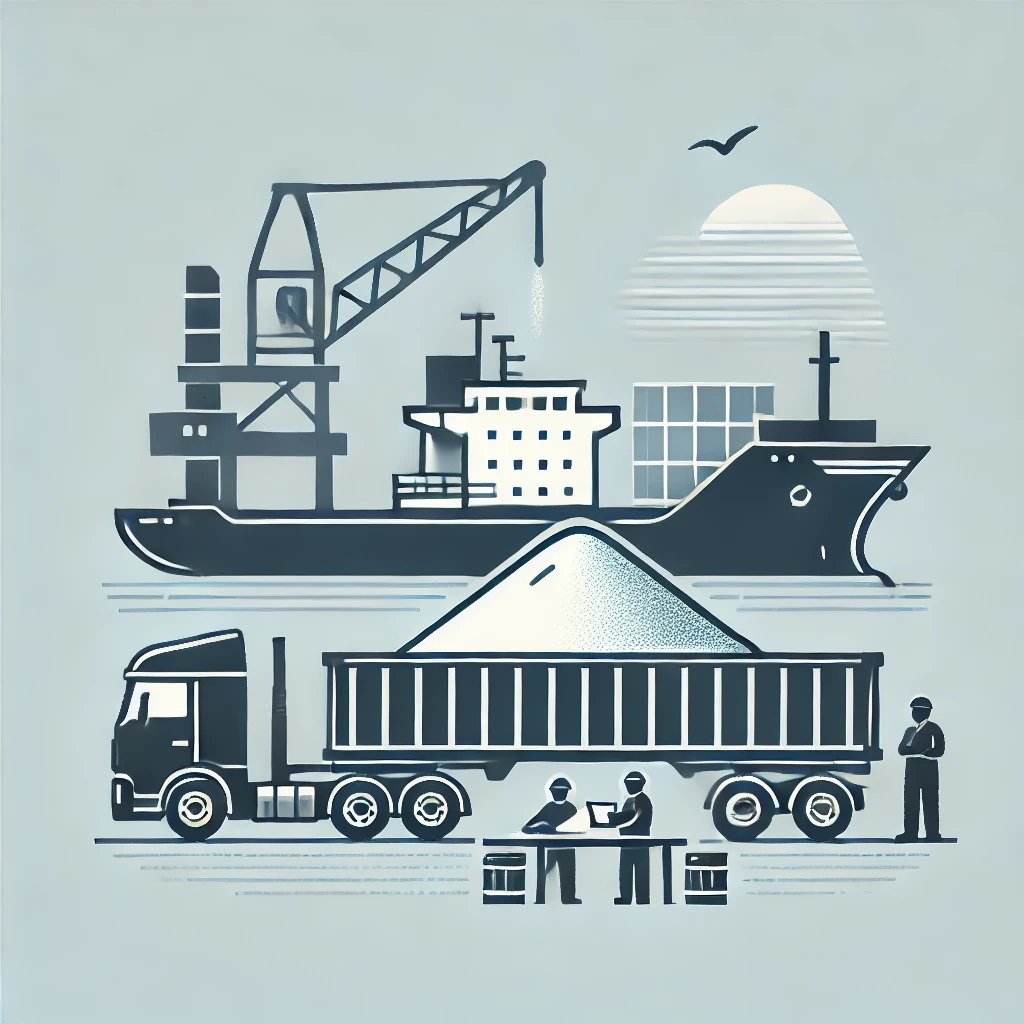
Ports may use different systems to load clinker.
Common arrangements include:
Each method has different loading capacity and operational limitations.
For example, a modern conveyor and ship-loader system may provide continuous high-volume loading.
In contrast, a terminal that depends heavily on trucks or mobile equipment may face more variability.
Therefore, buyers should understand the actual loading system rather than relying only on a quoted daily rate.
Buyers often focus heavily on the loading port but underestimate discharge conditions.
The destination port can create the same types of delays.
Before arranging the shipment, check:
A fast loading operation does not protect the buyer from expensive delays at the destination.
Therefore, complete clinker logistics planning must cover both ends of the voyage.
The Incoterm can significantly change the logistics responsibilities.
Under an FOB transaction, the buyer typically arranges the ocean freight and nominates the vessel according to the agreed terms.
As a result, the buyer may have more control over:
However, this also means the buyer needs enough shipping experience to manage those responsibilities.
Under CFR terms, the seller arranges and pays for ocean transportation to the named destination port, subject to the agreed contract terms.
For some buyers, CFR simplifies the purchasing process.
However, the buyer should still review:
A CFR quotation should not become a black box.
The buyer still needs to understand how the cargo will reach the destination.
The distance between the production source and loading port can materially affect the final clinker cost.
Two factories may quote similar ex-factory prices.
However, Factory A may sit close to a port while Factory B requires long-distance truck transportation.
Therefore, Factory A could produce a better FOB price even if its factory price is slightly higher.
Buyers should consider:
**Factory Price
This gives a much better commercial picture than the factory price alone.
Bulk buyers can reduce risk by avoiding several common mistakes.
A cheaper FOB price does not necessarily create a cheaper landed cost.
Freight, loading conditions and destination expenses may reverse the apparent saving.
Do not nominate a vessel before confirming cargo readiness and port acceptance.
Otherwise, the vessel may arrive before the cargo is ready.
A vessel may offer attractive freight but still be unsuitable for the loading or discharge port.
Demurrage conditions should form part of the commercial discussion from the beginning.
Always confirm how the contract defines the loading rate.
The shipment does not end when the vessel leaves the loading port.
The buyer must also plan discharge, storage and inland movement at the destination.
Before confirming a bulk clinker transaction, check the following:
A checklist like this can prevent expensive problems later.
Tajerin approaches clinker logistics as part of the complete supply transaction.
When a buyer sends an inquiry, we look at more than the clinker price.
The requirement normally includes:
Where needed, Tajerin can coordinate transportation requirements with experienced logistics partners.
The objective is to identify a practical combination of supply and transportation rather than offering an attractive product price that becomes uncompetitive after logistics costs.
For example, one production source may offer a lower ex-factory price, while another source may provide a better overall FOB or CFR result because of its location and loading conditions.
Therefore, we evaluate the commercial structure as a whole.
If you are planning a clinker shipment, send us:
Specification:
Quantity:
Destination Port:
Preferred Incoterm: FOB / CFR / CIF
Required Shipment Period:
Preferred Vessel Size: if known
Tajerin can review available supply and logistics options and prepare a quotation for comparison.
Compare the product price, freight, loading conditions, payment terms and total commercial cost before choosing your supplier.
There is no single factor. Cargo readiness, loading rate, vessel suitability, port restrictions, freight, laytime and destination discharge conditions all affect the transaction.
Demurrage is a charge that may apply when loading or discharge exceeds the allowed laytime under the relevant contractual arrangement.
A higher achievable loading rate can reduce vessel time at port and lower the risk of additional costs. However, buyers should verify that the rate is realistic.
Tajerin can coordinate transportation requirements with logistics partners where appropriate. The quotation and contract should clearly define responsibilities.
It depends on the buyer’s shipping capabilities. FOB can provide more control over freight, while CFR may simplify transportation arrangements. Buyers should compare the total commercial result.
Slow discharge can lead to vessel delays and additional costs at the destination. Therefore, buyers should evaluate destination-port operations before arranging the shipment.