Address:
Etesami St, Ziba Shahr, Bandar Abbas
Whatsapp:
Email:
info@tajerin.com

Clinker vs Cement is a common comparison for buyers, cement producers, and importers who want to understand the difference between these two closely related products.
Manufacturers produce clinker first and then use it as the main intermediate material for cement production. Cement, on the other hand, is the finished binder that construction companies use in concrete, mortar, plaster, and many other applications.
For bulk buyers, this difference matters.
A cement factory or grinding plant may prefer to import clinker and produce cement locally. In contrast, a distributor or construction-material buyer may need finished cement.
Therefore, buyers should understand the differences in production, handling, storage, shipping, and final use before they compare offers.
Clinker is a hard, nodular material that forms during the cement manufacturing process.
Cement producers prepare a mixture of limestone and other raw materials and heat it inside a rotary kiln at very high temperatures.
During this process, the raw materials react and form the main clinker mineral phases.
Afterward, the plant cools the clinker and stores it before grinding.
Therefore, clinker normally serves as an intermediate product rather than a final construction material.
Its main purpose is to provide the primary material for cement production.
Manufacturers produce cement by grinding clinker with gypsum.
In addition, depending on the cement type, they may add other mineral materials during grinding.
These materials may include:
As a result, the final product becomes a fine powder that acts as a binder in concrete, mortar, plaster, and other construction applications.
In simple terms:
Clinker comes first. Cement comes after clinker.
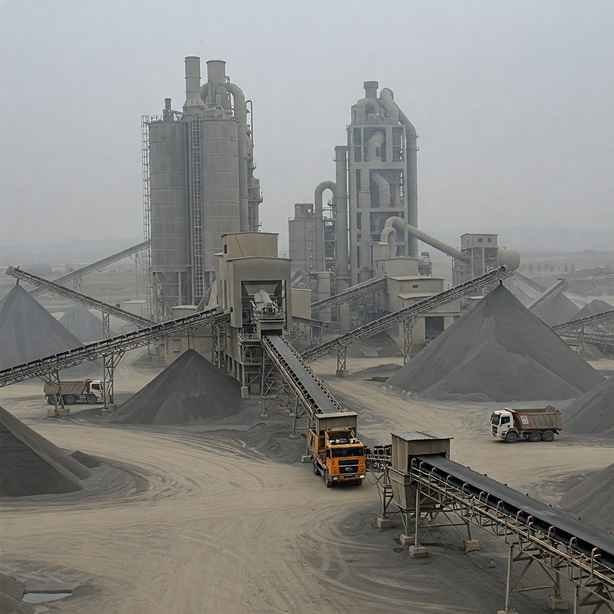
This clinker vs cement comparison shows why the two products serve different types of buyers.
| Factor | Clinker | Cement |
|---|---|---|
| Production stage | Intermediate product | Finished product |
| Physical form | Hard nodules | Fine powder |
| Main use | Cement production | Concrete, mortar and construction |
| Further processing | Requires grinding | Ready for use or distribution |
| Gypsum addition | Usually not added yet | Added during grinding |
| Main buyers | Cement plants, grinding plants, bulk traders | Distributors, concrete producers, contractors |
| Bulk shipping | Very common | Common |
| Moisture sensitivity | Important | Generally higher |
| Dust during handling | Lower than cement | Higher |
| Storage | Stockpile or covered storage depending on conditions | Usually requires dry silo or protected storage |
The conversion from clinker to cement follows a clear process.
First, the plant feeds clinker into a grinding system.
Next, the producer adds gypsum to help control the setting behavior of the finished cement.
Then, the grinding system reduces the material to the required fineness.
Depending on the cement type, the producer may also add other mineral materials during this stage.
As a result, the final product becomes cement.
The exact grinding recipe can vary according to:
For this reason, some cement producers prefer to import clinker instead of finished cement.
By grinding clinker locally, they can control the final blend and adjust the finished cement to local market requirements.
Clinker mainly contains mineral phases that form inside the kiln.
The most important phases include:
The balance between these phases can influence cement performance.
Cement contains ground clinker, but it also normally contains gypsum and may include additional mineral materials.
Therefore, clinker quality plays a major role in cement quality, but it does not determine the final result alone.
Other factors also affect finished cement performance, including:
In practice, buyers should evaluate both the clinker itself and the final cement production process.
The biggest practical difference between clinker and cement is how buyers use them.
Cement factories, grinding plants, integrated cement producers, and bulk commodity traders mainly purchase clinker.
These buyers usually have the equipment and technical capacity to grind clinker and produce cement locally.
Therefore, clinker suits industrial buyers with processing capability.
A much wider group of buyers purchases cement.
These buyers may include:
Unlike clinker, cement is already much closer to final construction use.
Therefore, buyers without grinding capacity usually purchase finished cement instead of clinker.
Several commercial and technical reasons can make clinker more attractive than finished cement.
Some countries have grinding plants but limited clinker production.
In this case, local producers can import clinker and use their existing grinding facilities.
Therefore, they can produce cement locally without building a complete clinker production line.
A grinding plant can control several important variables, including:
As a result, local producers can adjust the finished cement according to local standards and market demand.
In some markets, importing clinker in bulk and grinding it locally can make more commercial sense than importing finished cement.
However, the result depends on several factors, such as:
Therefore, buyers should calculate the economics for each destination instead of assuming that clinker will always be cheaper.
Both clinker and cement move through international trade, but they require different handling methods.
Suppliers commonly ship clinker in bulk.
Bulk carriers can transport large quantities between producing countries and cement-consuming markets.
Buyers should consider:
In addition, regional buyers may move clinker by truck or rail.
Because clinker comes in hard nodules rather than fine powder, bulk handling is often simpler than cement handling.
Suppliers can also ship cement in bulk.
However, cement requires more specialized handling because it consists of very fine powder.
Bulk cement normally requires:
Alternatively, suppliers can ship bagged cement in containers or conventional cargo arrangements.
Therefore, the right shipping method depends on quantity, destination, local infrastructure, and market requirements.
Storage creates another important difference between clinker and cement.
Clinker is physically more robust than cement.
However, buyers still need to protect it from excessive moisture and contamination.
Poor storage can create problems such as:
Therefore, large clinker stockpiles require proper management.
Cement is more sensitive to moisture.
Even small amounts of moisture can cause:
For this reason, buyers should normally store bulk cement in dry silos.
They should also protect bagged cement from humidity and direct water exposure.
There is no single answer.
Clinker is often easier to handle as a bulk solid because it consists of larger nodules rather than fine powder.
In contrast, cement needs tighter dust control and more specialized loading and unloading equipment.
However, transportation economics depend on several variables, including:
Therefore, a grinding plant may prefer clinker, while a distributor without grinding capacity will usually prefer finished cement.
Buyers should not compare clinker and cement only by price per ton. From a commercial perspective, a clinker vs cement comparison should include processing, freight, storage, and local production costs.
Cement requires additional processing after clinker production.
These extra costs may include:
Therefore, finished cement normally carries additional production cost compared with clinker.
However, a buyer who imports clinker still needs to grind and process it locally.
A more useful comparison looks like this:
**Clinker Purchase Price
Then, the buyer can compare that result with the cost of importing or purchasing finished cement.
As a result, serious buyers focus on the complete commercial cost rather than the initial purchase price alone.
Clinker buyers usually focus on properties that matter for cement production.
These may include:
Cement buyers, on the other hand, usually evaluate additional finished-product properties such as:
Therefore, clinker and cement buyers do not always require the same technical documents.
Each buyer should request the information that matches the product and intended use.
Clinker generally suits buyers that:
In other words, clinker is mainly an industrial input.
Finished cement generally suits buyers that:
Therefore, buyers closer to the final construction market usually choose cement.
Before choosing between clinker and cement, buyers should answer several practical questions.
Do you have grinding capacity?
If not, finished cement will usually be the more practical option.
Do you need control over the final cement composition?
If yes, clinker may offer greater flexibility.
Can your port handle bulk clinker efficiently?
If the answer is no, the logistics may reduce the commercial advantage.
What is the total landed and processing cost?
Buyers should compare the full cost rather than the supplier’s price alone.
What product does your local market actually need?
Ultimately, a technically attractive option may not make commercial sense if the local market cannot support it.
Tajerin supplies clinker and cement for commercial and bulk requirements through established production and supply sources.
The appropriate product depends on the buyer’s operation.
For example, a cement grinding plant may require clinker with a defined chemical and mineralogical specification.
In contrast, a cement importer may require a specific finished cement type and standard.
When requesting a quotation, buyers should provide:
For cement inquiries, buyers should also state the required cement type or applicable standard.
For clinker inquiries, buyers should provide the required clinker specification or an acceptable range where available.
With this information, Tajerin can review suitable supply options and prepare a quotation based on the available commercial conditions.
At the basic level, the difference between clinker and cement is simple:
Clinker is an intermediate material. Cement is the finished binder produced from clinker.
However, commercial buyers need to look beyond that basic definition.
The right choice depends on:
For example, a grinding plant may benefit from importing clinker.
On the other hand, a construction-material distributor may find finished cement more practical.
Therefore, buyers should compare the entire commercial process rather than only the product price. Ultimately, the clinker vs cement decision depends on the buyer’s production capacity, logistics, and local market needs.
If you are evaluating clinker or cement supply, send Tajerin your requirements.
Please include:
Product: Clinker or Cement
Specification / Standard:
Quantity:
Destination Port:
Preferred Incoterm:
Required Shipment Period:
We can review the requirement and provide a quotation for comparison with your other supply options.
Compare the specification, price, logistics and commercial terms, then choose the option that works best for your business.
No. Clinker is an intermediate material used to manufacture cement. Manufacturers produce cement by grinding clinker with gypsum and, depending on the cement type, other materials.
Generally, no. Cement producers mainly use clinker as an intermediate material for cement manufacturing rather than as a direct construction binder.
Some plants have grinding capacity but limited or no local clinker production. Therefore, they import clinker and produce cement locally.
Clinker may have a lower initial price because cement requires additional processing. However, buyers should also include grinding, additives, handling, storage, and other local costs before comparing the final economics.
Generally, yes. Clinker is less sensitive than finished cement. However, buyers still need to protect clinker from excessive moisture and contamination.
Yes. Tajerin can provide quotations for clinker and cement based on specification, quantity, destination, available supply, and commercial requirements.