
Address:
Etesami St, Ziba Shahr, Bandar Abbas
Whatsapp:
Email:
info@tajerin.com
Tajerin is an Ordinary Portland Cement supplier serving contractors, concrete producers, distributors, construction companies, infrastructure projects, and bulk importers.
However, buying OPC is not only about comparing price per metric ton. Buyers should first confirm the required strength class, standard, packaging, quantity, destination, and delivery term.
Therefore, a clear inquiry helps suppliers prepare quotations that can be compared more accurately.
Tajerin works with established production sources and can review each request according to technical specification, required volume, packaging, destination, shipment schedule, and commercial conditions.
Send us your OPC grade, standard, quantity, packaging and destination. Get a quotation from Tajerin, compare it with your other options, and choose the commercial terms that work best for your project.
Ordinary Portland Cement, commonly known as OPC, is one of the most widely used types of cement in concrete and general construction.
It is produced mainly by grinding Portland cement clinker with a controlled amount of gypsum and other permitted constituents according to the applicable cement standard.
When mixed with water, the cement reacts and gradually develops strength.
As a result, OPC is widely used in:
However, OPC is available in different strength classes and specifications.
Therefore, buyers should identify the exact required grade before requesting a quotation.
An Ordinary Portland Cement supplier may offer different strength classes depending on the production source and applicable standard.
Common commercial requirements may include:
However, buyers should not choose a cement only because one number is higher than another.
The correct grade should match the structural design, concrete mix, construction schedule, and applicable standard.

OPC 42.5 is commonly specified for general concrete and construction applications.
Depending on the standard, it may provide the strength development required for many structural projects.
However, the exact technical properties should always be checked against the project specification.
Therefore, buyers should confirm whether the required product is:
A quotation that only says “42.5 cement” may not be detailed enough for some projects.
OPC 52.5 is generally associated with a higher cement strength class.
It may be used where projects require higher strength development or specific production performance.
For example, some precast or high-performance concrete applications may specify this class.
However, OPC 52.5 is not automatically better for every construction project.
Instead, buyers should select it only when the technical requirement calls for it.
Some cement standards distinguish between normal and rapid early strength.
For example, buyers may encounter suffixes such as:
Therefore, OPC 42.5N and OPC 42.5R should not automatically be treated as the same product.
The required early strength can affect:
For this reason, buyers should provide the complete cement designation.
OPC can be produced according to different international or national standards.
Depending on the destination, buyers may require standards based on:

Therefore, a buyer should ideally provide the exact standard required.
Simply requesting:
“OPC 42.5”
may not be sufficient.
A better inquiry might be:
“OPC 42.5R according to the required EN specification.”
A reliable Ordinary Portland Cement supplier should provide technical information relevant to the offered cement.
Depending on the applicable standard, buyers may review:
However, the limits vary between standards.
Therefore, the buyer’s required specification should remain the main reference.
For additional industry information on cement, clinker and production data, buyers can review resources published by the U.S. Geological Survey (USGS).
Strength class is one of the main factors buyers notice when purchasing cement.
However, final concrete strength does not depend on cement alone.
It also depends on:
Therefore, purchasing a higher-strength cement does not automatically guarantee better concrete.
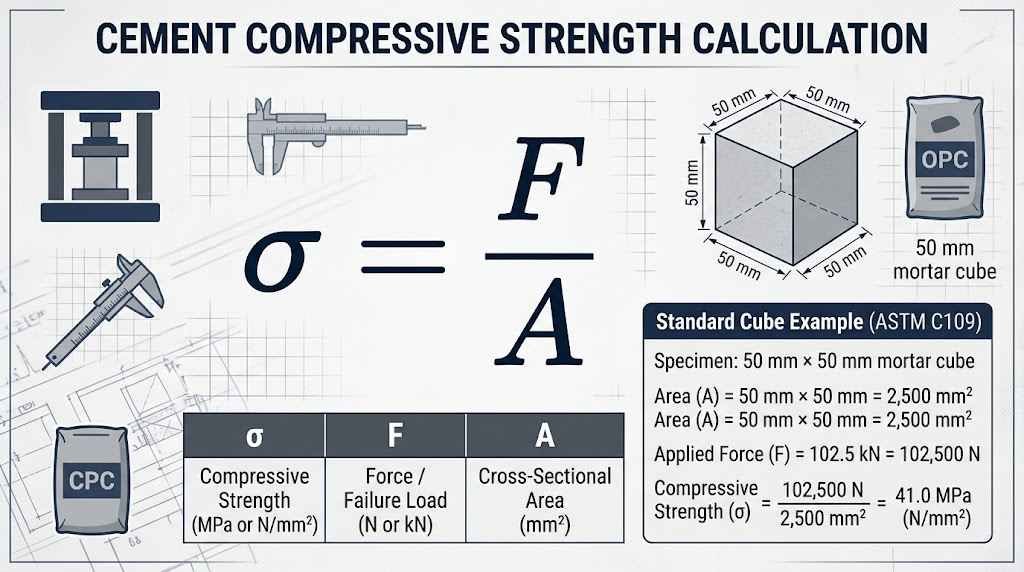
The correct approach is to follow the approved engineering specification.
Ready-mix producers often require consistent cement performance.
For example, they may pay particular attention to:
Therefore, repeatability can be just as important as the result from one laboratory sample.
Moreover, ready-mix plants may consume substantial monthly volumes.
As a result, supply continuity should also be considered when selecting a supplier.
Precast producers may require predictable early strength and consistent production performance.
In this case, the buyer may focus on:
Therefore, the chosen OPC grade should match the actual precast production cycle.
A slightly lower cement price may not be useful if inconsistent performance slows production.
OPC is widely used in normal building construction.
Typical applications may include:
However, builders should still follow the approved project specification.
Therefore, contractors should not substitute one OPC grade for another without technical approval.
Infrastructure projects may require stricter technical and documentation controls.
For example, buyers may need:
Therefore, these requirements should be communicated before commercial terms are finalized.
A Certificate of Analysis, or COA, helps buyers review the technical characteristics of the offered OPC.
Depending on the standard, the certificate may include:
However, buyers should compare the certificate with their own project requirements.
A COA should support the purchasing decision, not replace the project specification.
Depending on the manufacturer and market, buyers may also receive mill or quality certificates.
These documents may identify:
Therefore, buyers should confirm in advance which documents are required for project approval or import clearance.
For larger transactions, buyers may request independent inspection.
Depending on the commercial agreement, inspection may include:
Moreover, the inspection procedure should be agreed before shipment.
This helps avoid disagreement over testing methods or acceptance criteria later.
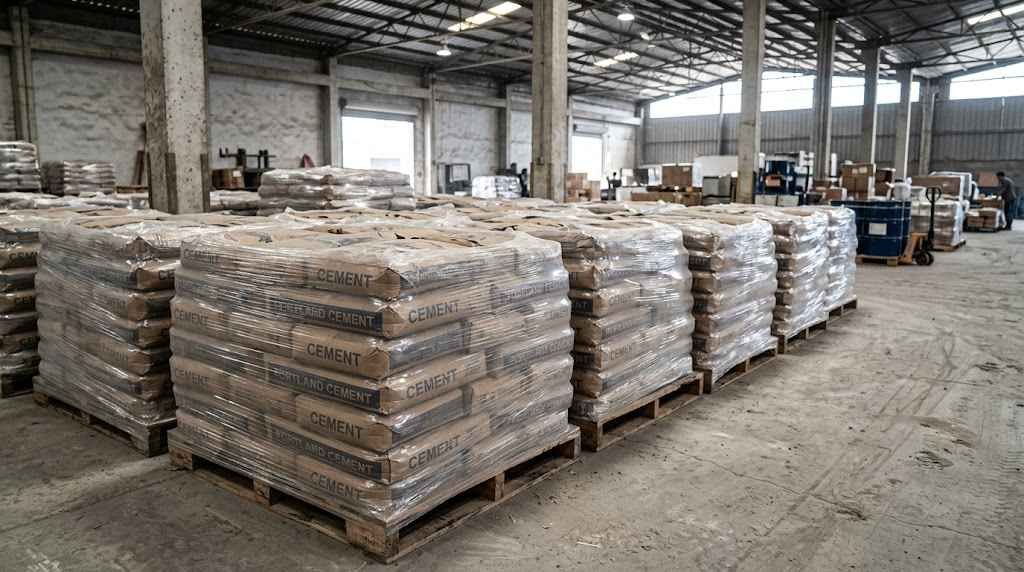
Bagged cement is suitable for many construction and distribution markets.
Common packaging may include:

However, packaging availability depends on the production source.
Therefore, buyers should state the exact bag size required.
For example:
Packaging: 50 kg PP bags
is much clearer than:
“Need bagged OPC.”
Some industrial buyers may prefer jumbo bags.
This can simplify handling where larger packages are acceptable.
However, jumbo bags require suitable:
Therefore, packaging should match the buyer’s receiving infrastructure.
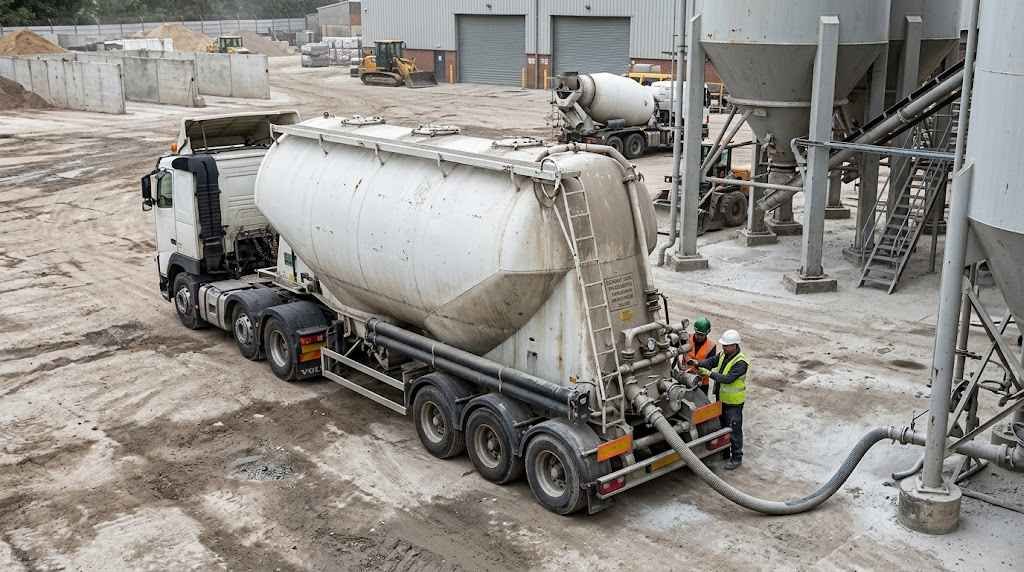
Large industrial buyers may purchase OPC in bulk.
Bulk supply may reduce packaging requirements and support continuous production.
However, the buyer must have suitable infrastructure such as:
As a result, bulk OPC is best suited to buyers with established handling systems.
Neither option is automatically better.
Bagged OPC may be more suitable when:

By contrast, bulk OPC may be more efficient where:
Therefore, buyers should compare complete operational cost rather than only packaging cost.
Cement packaging must protect the material from moisture and handling damage.
Poor-quality bags can create:
Therefore, packaging quality should be considered when comparing offers.
A slightly cheaper bagged product may become more expensive if a significant quantity is lost during handling.
There is no single global OPC price.
The commercial price may depend on:
Therefore, buyers should compare quotations on the same basis.
For example:
FOB vs FOB
or:
CFR Mombasa vs CFR Mombasa
provides a more meaningful comparison.
A low cement price can look attractive at first.
However, the buyer should also check:
For example, an offer that is cheaper by a few dollars per ton may become less attractive if freight or packaging costs are higher.
Therefore, the buyer should calculate total procurement cost.
Under an FOB arrangement, the buyer normally arranges the main ocean freight from the agreed loading port.
Therefore, an FOB quotation should clearly state:
Moreover, the loading terms should be understood before the contract is finalized.
Under CFR terms, the seller arranges the main ocean freight to the named destination port according to the applicable Incoterm.
Therefore, the exact destination port must be provided.
For example:
CFR Dar es Salaam
is much more useful than:
CFR East Africa
because freight depends heavily on the actual route.
Under CIF terms, insurance is also arranged according to the applicable Incoterm requirements.
However, buyers should still calculate destination costs such as:
Therefore, CIF should not automatically be considered the final delivered price to the project site.
Cement logistics can significantly affect final landed cost.
For bagged cement, buyers should consider:
For larger volumes, other shipment options may also be reviewed.
Therefore, logistics should be considered together with the product price.
Tajerin can coordinate transport requirements with logistics partners where needed.
Containerized shipment is common for many bagged cement transactions.
However, buyers should focus on net cement tonnage per container, not only freight per container.
For example, differences in:
can change freight cost per ton.
As a result, container utilization should be included in commercial comparison.
For very large volumes, bulk or vessel-based shipment may be considered where loading and receiving infrastructure supports it.
However, commercial viability depends on:
Therefore, vessel-size inquiries should include expected cargo volume from the beginning.
Cement is sensitive to moisture.
Exposure to water or excessive humidity can cause hydration and lump formation.
Therefore, buyers should pay attention to:
In addition, damaged or wet bags should be identified during receiving inspection.
Bagged OPC should be stored in a dry environment.
Where possible, buyers should:
Moreover, excessively long storage periods may affect cement performance depending on conditions.
Therefore, purchasing plans should reflect realistic consumption rates.
Contractors usually focus on project compliance, schedule, and site delivery.
Before placing an order, they should confirm:
Therefore, procurement should align with the construction program.
Buying too much cement too early can create unnecessary storage risk.
Distributors may have different priorities.
For example, they may focus on:
Therefore, distributors should provide information about their destination market and expected recurring demand.
This can help suppliers evaluate suitable production and packaging options.
Before selecting an Ordinary Portland Cement supplier, buyers should compare several factors.
Is the required OPC strength class available?
Does the cement comply with the required technical standard?
Do the test results match the project requirement?
Is the bag size and packaging quality suitable?
Can the supplier provide the required volume on schedule?
Can the supplier provide the required COA and commercial documents?
Can third-party inspection be arranged if necessary?
Is the proposed shipment method commercially practical?
Are the commercial terms acceptable?
Ultimately, the best offer is the one that combines technical compliance, reliable supply, suitable packaging, workable logistics, and competitive commercial terms.
Depending on the transaction and destination, buyers may require:
However, the final documentation list should be agreed before shipment.
This is especially important when payment is arranged through a Letter of Credit.
Payment terms depend on the buyer, supplier, quantity, destination, and transaction structure.
Possible arrangements may include:
Nevertheless, payment conditions should be clear before production and shipment planning begin.
Moreover, LC document requirements should be reviewed carefully to reduce the possibility of discrepancies.
To receive a useful quotation, buyers should provide:
For example:
Product: Ordinary Portland Cement
Grade: OPC 42.5R
Standard: As per buyer requirement
Quantity: 10,000 MT
Packaging: 50 kg bags
Destination: Mombasa, Kenya
Delivery: CFR
Shipment: December
Inspection: If required
Payment: LC
With this information, an Ordinary Portland Cement supplier can prepare a much more accurate and commercially useful offer.
Before asking for a quotation, make sure you can answer these questions:
If these points are clear, quotations become much easier to compare.
However, if the project specification is uncertain, confirm the requirement with the engineer, consultant, ready-mix plant, or technical department before placing an order.
Tajerin operates as a trading and supply company with access to established cement production sources.
For each inquiry, we review:
In addition, Tajerin can coordinate shipping requirements with logistics partners where required.
Our objective is not simply to provide an OPC price per ton.
Instead, we aim to prepare a commercially workable quotation that the buyer can compare with other available options.
OPC stands for Ordinary Portland Cement, a widely used cement type for concrete and general construction.
Send the required OPC grade, standard, quantity, packaging, destination, shipment period, and preferred delivery term.
They represent different cement strength classes under relevant standards. The correct class depends on the project specification.
The exact designation depends on the applicable standard, while the “R” commonly indicates a rapid early-strength category.
No. The appropriate cement should match the engineering and construction requirements.
Depending on source availability, 50 kg bags are a common commercial packaging option.
Yes, where appropriate loading, transport, storage, and receiving infrastructure is available.
Depending on the source, destination, quantity, and shipment conditions, Tajerin can review different delivery structures.
Yes. Inspection and testing requirements can be agreed before shipment.
If you are looking for an Ordinary Portland Cement supplier, send Tajerin your technical and commercial requirement.
At minimum, provide:
OPC Grade + Standard + Quantity + Packaging + Destination + Delivery Term