
Tanzania Announces Cement Import Tax Relief – Weekly Market Update
Published: 17 November 2026
Reporting Period: 9–15 November 2026
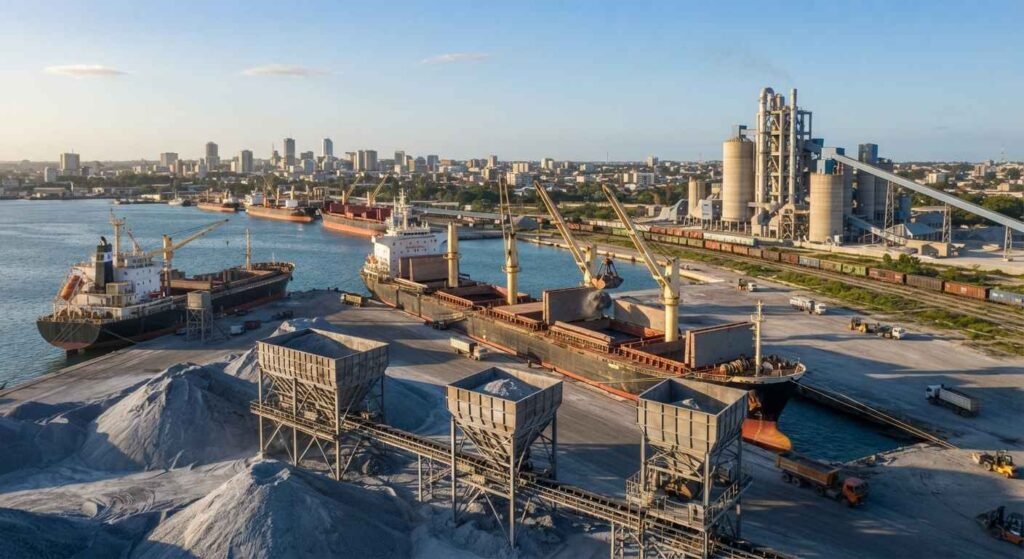
Tanzania Cement Import Tax Relief November 2026 is the main commercial development in this week’s regional cement and clinker market. The Tanzanian government has announced the removal of taxes on imported cement and raw materials used in cement production, potentially changing sourcing conditions for importers. Meanwhile, Shree Cement has outlined a major investment programme in India, while dry-bulk freight conditions remain mixed across Asian markets.
For international buyers, these developments highlight the importance of checking import regulations, comparing delivered costs and securing reliable shipment arrangements.
Weekly Market Summary
- Tanzania announced tax relief covering imported cement and cement-production raw materials, although the precise customs treatment of clinker requires confirmation.
- India’s Shree Cement outlined plans to invest approximately US$744 million in new cement manufacturing facilities.
- Asian Supramax freight conditions remained relatively soft despite improvements in Atlantic markets.
- Potential East African clinker trade opportunities will depend on actual customs implementation and competitive delivered prices.
- No independently verified major change in natural gypsum stone or gypsum powder trading conditions was identified during the reporting period.
1. Tanzania Announces Tax Relief on Cement Imports and Production Materials
What Changed
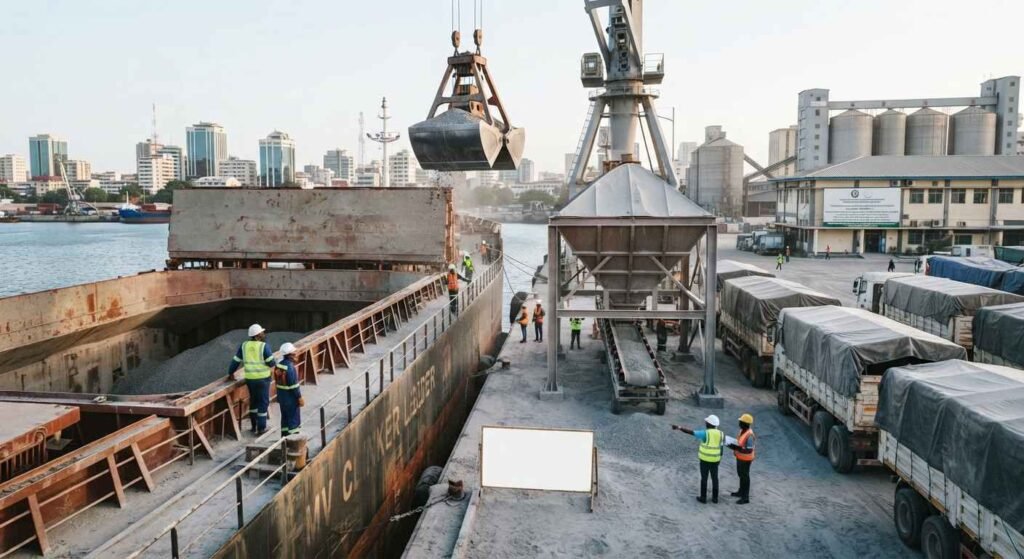
On 9 November 2026, Tanzania’s The Guardian reported that Prime Minister Mwigulu Nchemba had announced the removal of taxes on imported cement and raw materials used in cement manufacturing.
Speaking on 8 November during a visit to the Simiyu region, the Prime Minister said the measure was intended to help stabilise cement prices and reduce construction costs.
The announcement is commercially significant for importers and regional suppliers.
However, the available report does not identify every affected tariff classification, the exact taxes removed or the detailed implementation procedures.
In particular, the customs treatment of cement clinker under HS heading 2523 should be confirmed through an applicable official notice or written guidance from Tanzanian customs authorities.
Commercial Impact
Potential implications for clinker buyers
If the announced measures cover cement clinker imports and are fully implemented, importers may benefit from lower landed costs.
This could improve the competitiveness of imported clinker relative to certain domestic supply options.
For international suppliers, Tanzania may therefore become a market worth reassessing for bulk clinker shipments.
However, a reduction in import taxes does not automatically guarantee stronger demand or profitable import opportunities.
Actual competitiveness will depend on:
- Applicable customs duties, levies and exemptions
- FOB clinker price
- Ocean freight and port charges
- Discharge arrangements
- Product quality and specifications
- Local cement production requirements
Importers should avoid assuming that all clinker shipments qualify for tax-free treatment until the relevant customs classification and implementation rules are confirmed.
Recommended Action
Before negotiating a new clinker shipment to Tanzania, buyers should verify the current import requirements with the Tanzania Revenue Authority or a qualified customs agent.
They should also compare FOB and CFR quotations based on the same cargo specifications and quantities.
For technical specifications and commercial supply options, visit Tajerin’s Clinker Supplier page.
2. Shree Cement Plans Major Manufacturing Investment in India
What Changed
On 12 November 2026, Shree Cement announced plans to invest approximately ₹70 billion, equivalent to around US$744 million, in cement manufacturing projects in Andhra Pradesh, India.
The proposed investments cover Kadapa, Anakapalli and Guntur districts.
Industry reporting published on 13 November indicated that the company had not yet disclosed the precise production capacity of each project or a detailed commissioning schedule.
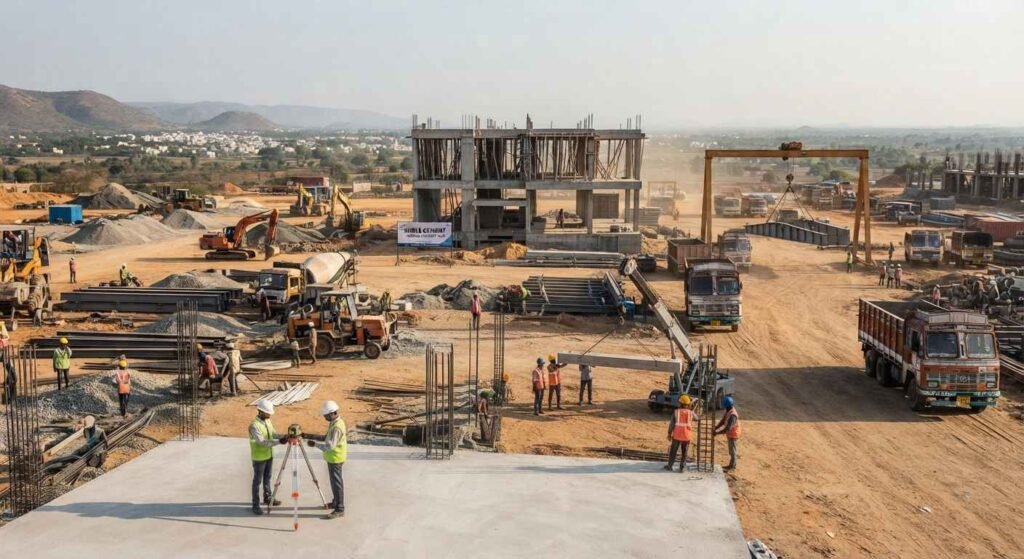
Shree Cement currently has approximately 75 million tonnes per year of installed cement production capacity.
Commercial Impact
The investment is another indication of long-term expansion in India’s cement industry.
Additional cement manufacturing activity can support demand for limestone, natural gypsum and other production inputs.
However, new integrated cement plants may also increase domestic clinker production.
Consequently, the investment should not be interpreted as direct evidence of rising Indian clinker import demand.
For international clinker suppliers, future opportunities will depend on whether individual production facilities require externally sourced clinker.
For natural gypsum stone suppliers, the expansion is worth monitoring because gypsum is used in cement manufacturing.
Recommended Action
Bulk material suppliers should monitor project commissioning schedules, plant specifications and raw-material sourcing requirements.
Buyers assessing regional supply options can also review Tajerin’s Gypsum Stone Supplier page.
3. Asian Supramax Freight Remains Mixed
What Changed
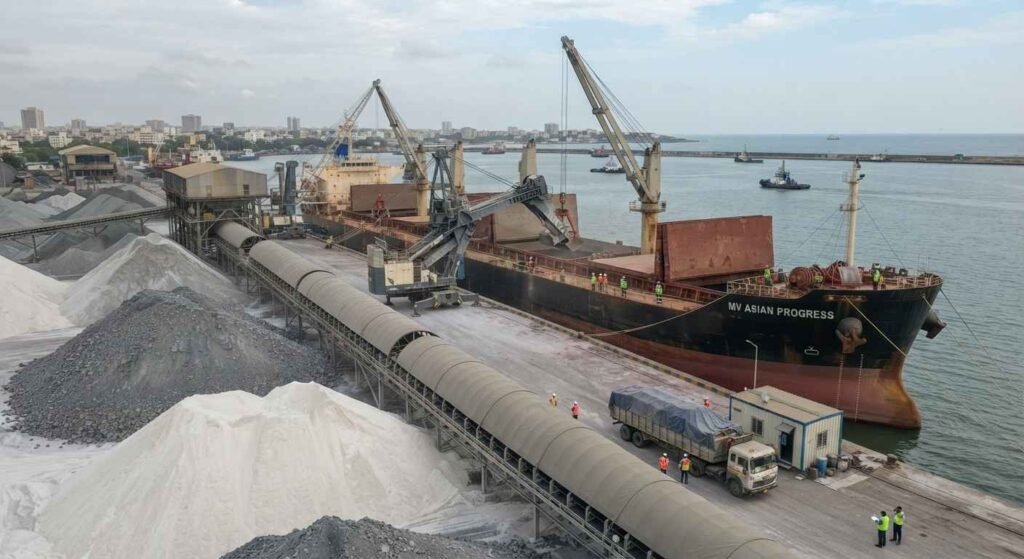
The Baltic Exchange’s Week 46 dry-bulk report, published on 13 November 2026, showed differing market conditions across vessel classes and regions.
The Supramax/Ultramax segment improved during the second half of the week, supported mainly by stronger Atlantic activity.
However, parts of the Asian and Indian Ocean markets remained softer, with vessel availability and limited cargo activity continuing to influence freight negotiations.
The wider Baltic Dry Index increased during the week, although this does not mean that freight rates rose on every relevant clinker or gypsum route.
Commercial Impact
For buyers shipping bulk clinker or gypsum, regional vessel availability remains an important part of the delivered-cost calculation.
A relatively softer market in some Asian trading areas may create opportunities to negotiate competitive freight arrangements.
However, freight levels remain dependent on the individual voyage.
For example, a clinker shipment from Bandar Abbas to Dar es Salaam may face different freight conditions from a cargo moving between China and Bangladesh.
Buyers should therefore avoid applying general Baltic market movements directly to their CFR quotations.
Recommended Action
Before confirming a bulk shipment, obtain current freight indications based on:
- Loading port and destination
- Cargo quantity
- Vessel size and availability
- Shipment window
- Loading and discharge rates
- Laytime and demurrage provisions
For November and December shipments, buyers should compare updated freight indications rather than relying solely on previous quotations.
4. What These Developments Mean for East African Buyers
Tanzania’s announcement is particularly relevant for companies evaluating cement and clinker sourcing in East Africa.
If the announced tax measures are implemented for the relevant product classifications, importing companies may need to reassess their landed-cost calculations.
A practical comparison should include the following:
| Commercial Factor | Buyer Consideration |
|---|---|
| Product price | Compare FOB offers from alternative origins |
| Import charges | Verify actual duties and exemptions with customs |
| Ocean freight | Request current route-specific CFR quotations |
| Quality | Confirm chemical specifications and inspection requirements |
| Port operations | Review discharge capacity and potential demurrage |
| Contract terms | Clarify payment, delivery and documentary requirements |
The central commercial question is whether the total landed cost of imported clinker or cement is competitive under the applicable customs and logistics conditions.
A favorable tax announcement alone is not sufficient to determine the best purchasing decision.
Weekly Commercial Outlook
Market Assessment: Uncertain, With Potential Opportunities for East African Buyers
Tanzania’s tax-relief announcement presents a potentially positive development for cement and raw-material importers.
However, the extent of the opportunity will depend on confirmation of product coverage and practical customs implementation.
India’s continued cement-sector investment supports a positive long-term industrial outlook, although it does not establish an immediate increase in imported clinker demand.
Meanwhile, regional differences in dry-bulk freight conditions underline the importance of obtaining current freight quotations.
For gypsum markets, no commercially significant change was independently confirmed during this reporting period.
Buyer Checklist

Before placing a bulk clinker, cement or gypsum order:
- Verify import duties and exemptions for the exact product and HS code.
- Confirm the required chemical and physical specifications.
- Request updated FOB and CFR quotations.
- Check vessel availability for the preferred loading period.
- Review port discharge conditions and possible demurrage exposure.
- Confirm payment terms, inspection arrangements and documentation.
- Compare complete landed costs rather than product prices alone.
For further industry developments, visit Tajerin Market News.
Request a Bulk Supply Quotation
Tajerin is a trading and supply company working with production and supply sources for clinker, gypsum and other industrial materials.
We provide commercial quotations based on buyers’ specifications and can assist with shipment coordination through logistics partners.
For a quotation, please send us:
- Product
- Required specifications
- Quantity
- Destination port
- Preferred Incoterm
- Required shipment period
Contact Tajerin to receive a quotation, compare it with your other options and choose the commercial terms that work best for you.
Sources
1. The Guardian Tanzania – 9 November 2026
PM: Tax relief on imported cement and raw materials to stabilise prices.
Supports the reported announcement by Tanzania’s Prime Minister.
https://ippmedia.co.tz/the-guardian/news/local-news/read/pm-tax-relief-on-imported-cement-and-raw-materials-to-stabilise-prices-2026-11-09-104807
2. The Economic Times / PTI – 12 November 2026
Shree Cement to invest Rs 7,000 crore in Andhra Pradesh; plans plants in 3 districts.
Supports the investment announcement, project locations and existing production capacity.
https://economictimes.indiatimes.com/industry/indl-goods/svs/cement/shree-cement-to-invest-rs-7000-crore-in-andhra-pradesh-plans-plants-in-3-districts/articleshow/135768051.cms
3. Global Cement – 13 November 2026
Shree Cement to invest US$744m in new plants in Andhra Pradesh.
Supports investment details and the absence of a confirmed project completion schedule.
https://globalcement.com/news/21488-shree-cement-to-invest-us-744m-in-new-plants-in-andhra-pradesh
4. Baltic Exchange – 13 November 2026
Bulk Report – Week 46.
Supports the regional dry-bulk freight market assessment.
https://www.balticexchange.com/en/data-services/WeeklyRoundup/dry/news/2026/bulk-report-week-46.html